Why Edge Banding First Changes Decorative Moulding Production
Edge First. Size Later. This sequence changes where value is created in decorative moulding production. Instead of cutting every strip to its final length before the visible edge has been completed, a factory can first establish a controlled edge-banding process on longer profile workpieces, then cut or size them for the required order.
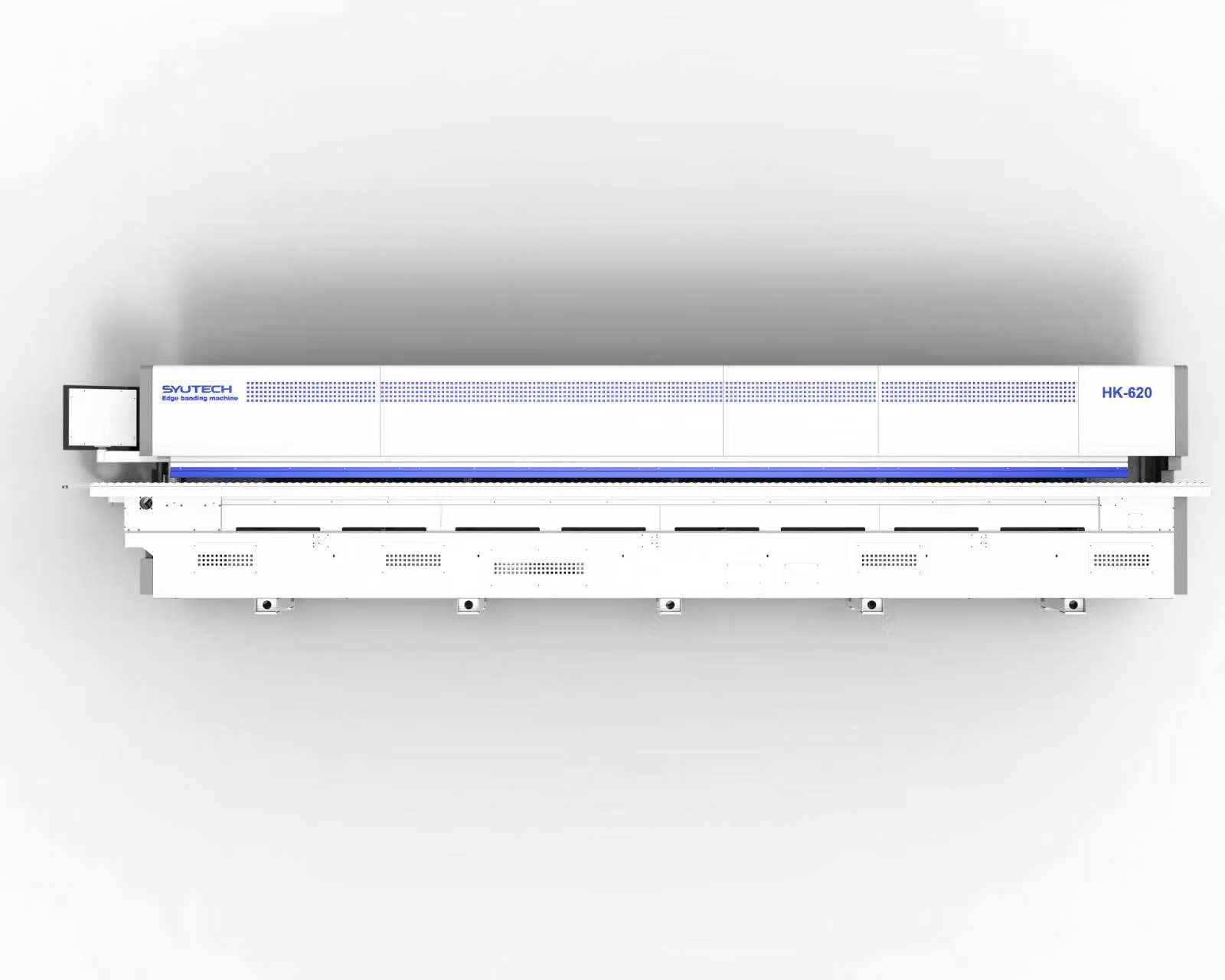
For door plants, furniture factories, and decorative moulding producers, the change is not simply about adding another machine. It is about reorganizing the production logic around the surface that customers actually see. The HK620 flexible moulding edge banding line is designed for this type of profile and strip work rather than as a general replacement for a standard panel edge bander.
Why the Traditional Sequence Creates More Variation
Decorative mouldings are often handled as many short components. Each piece may need positioning, adhesive application, pressing, trimming, inspection, and rework. When final-size pieces enter edge banding one by one, small differences in feeding and manual handling can accumulate across a batch.
The problem becomes more visible when a factory handles several widths, finishes, or order lengths during the same shift. Short components create more starts and stops. Operators must repeatedly align workpieces, manage direction, and protect already-finished surfaces. A process that looks acceptable on one sample may become difficult to keep consistent over a full production run.
This is why the order of operations matters. If the edge can be processed continuously before final sizing, the factory can separate two different jobs:
- Edge creation: feed, adhesive control, pressing, trimming, and visual inspection.
- Order sizing: cut the processed profile according to the final component list.
Separating these jobs makes each stage easier to define and verify.
What “Edge First. Size Later.” Means in Practice
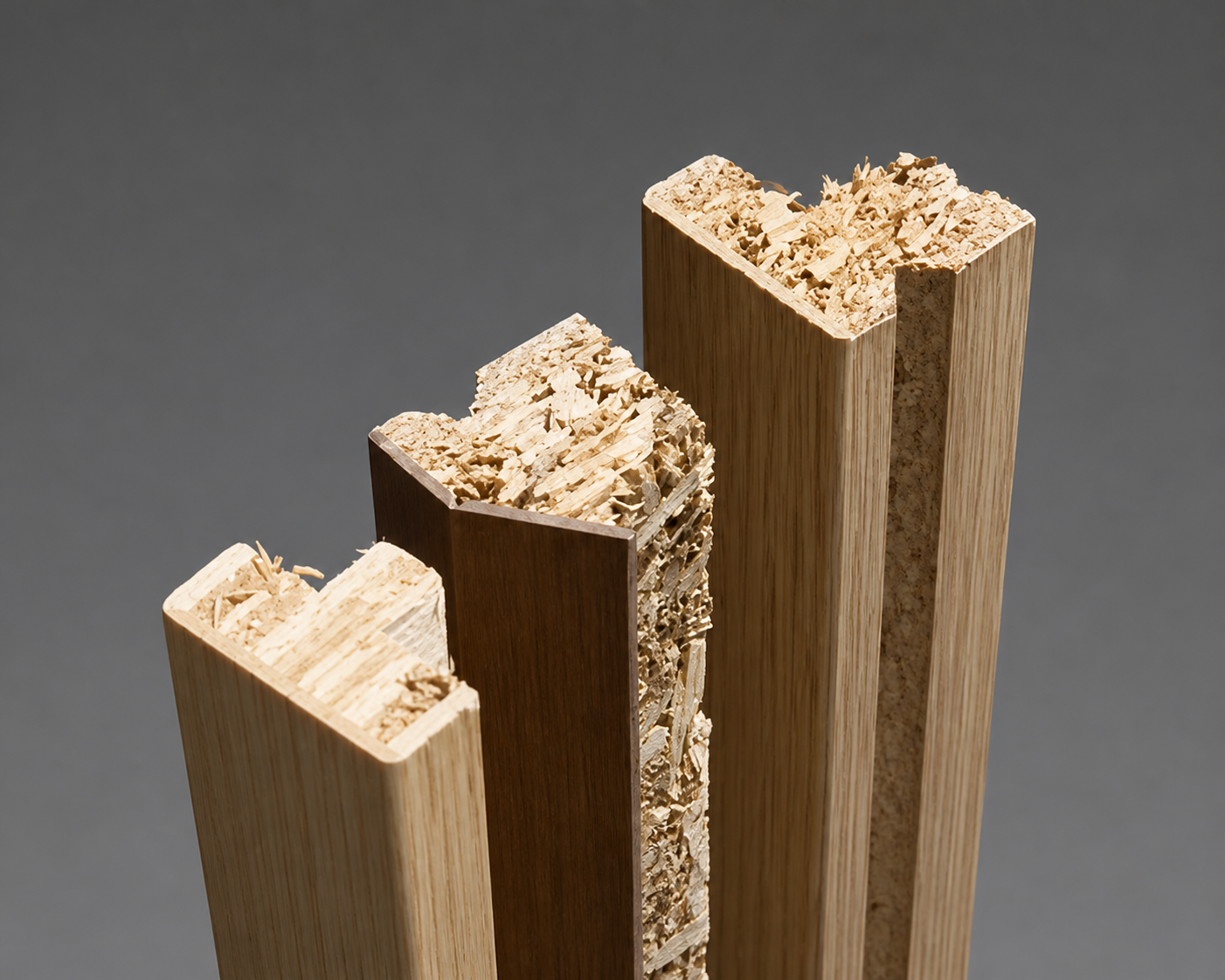
The concept does not mean that every profile should be run without preparation. The workpiece geometry, substrate, edge material, surface finish, adhesive process, and final cutting method still need to be confirmed. The principle is to move the most repeatability-sensitive visible-edge operation ahead of repeated final-length handling.
A practical production sequence may include:
- Classify the moulding by cross-section, material, edge requirement, and visible face.
- Confirm that the profile is suitable for stable feeding and pressing.
- Run the edge-banding process on the prepared strip or profile length.
- Inspect adhesion, surface appearance, edge position, and profile continuity.
- Cut or size the finished strip for the door, frame, furniture, or decorative order.
This approach can reduce repeated manual intervention and make batch inspection clearer. It does not eliminate the need for samples or operator control. It gives the factory a more structured place to control them.
Why Profile Work Is Different from Standard Panel Edge Banding
A standard straight-panel edge bander is built around panel dimensions and relatively predictable reference surfaces. Decorative strips and skeleton-door profiles can have narrower bodies, shaped cross-sections, visible transitions, or feeding conditions that require a dedicated review.
HK620 is positioned for skeleton-door profiles, decorative strips, door casing, furniture trim, wooden profile workpieces, and related interior components. It should not be selected only from a catalogue description. Buyers should confirm the actual workpiece family and send representative samples before the final configuration is agreed.
Factories comparing adjacent processes can also review what softforming edge banding is. Softforming and moulding edge banding share a concern for formed or non-standard visible edges, but the tooling, workpiece reference, and production objective must be evaluated for the real product.
Where PUR Fits into the Process
HK620 uses a PUR glue process. For visible profile components, adhesive selection is part of the complete production condition rather than an isolated machine feature. Substrate condition, edge material, temperature control, glue handling, pressure, feed stability, and later storage conditions all influence the result.
Buyers who need a foundation on adhesive behaviour can read what PUR edge banding adhesive is. A sample test should reproduce the intended material combination and finish, not only show that the machine can feed a convenient demonstration piece.
HK620: Approved Public Reference Specifications
The following information has been approved for public reference. Final configuration remains subject to sample and application confirmation.
| Item | Public reference |
|---|---|
| Application | Skeleton-door profiles, decorative strips, door casing, furniture trim, and related wooden profiles |
| Adhesive process | PUR glue edge banding |
| Minimum workpiece width | 70 mm |
| Feed speed | 18 m/min |
| Electrical supply | 380 V |
| Installed power | 20 kW |
| Air pressure | 0.6 MPa |
| Control system | Delta control system |
| Machine length | Approximately 7.5 m |
| Machine weight | Approximately 3 tons |
| Packaging | 8.3 m × 0.9 m × 1.6 m |
What a Factory Should Verify Before Changing the Sequence
The best evidence is a repeatable sample run with the factory’s own workpieces. Before adopting an edge-first sequence, the production and purchasing teams should verify:
- Which profile face is the feeding and positioning reference?
- Which surfaces remain visible after assembly?
- Are the substrate and edge material stable across the expected batch?
- Does the processed strip remain suitable for the downstream cutting method?
- How will different lengths and order quantities be scheduled after edge banding?
- What acceptance standard will be used for adhesion, appearance, continuity, and rework?
Factories should send workpiece photos, cross-section dimensions, materials, edge material, expected order mix, and production requirements. A short demonstration is useful for screening, but it does not by itself confirm stable production for every profile family.
When the Edge-First Model Is Most Valuable
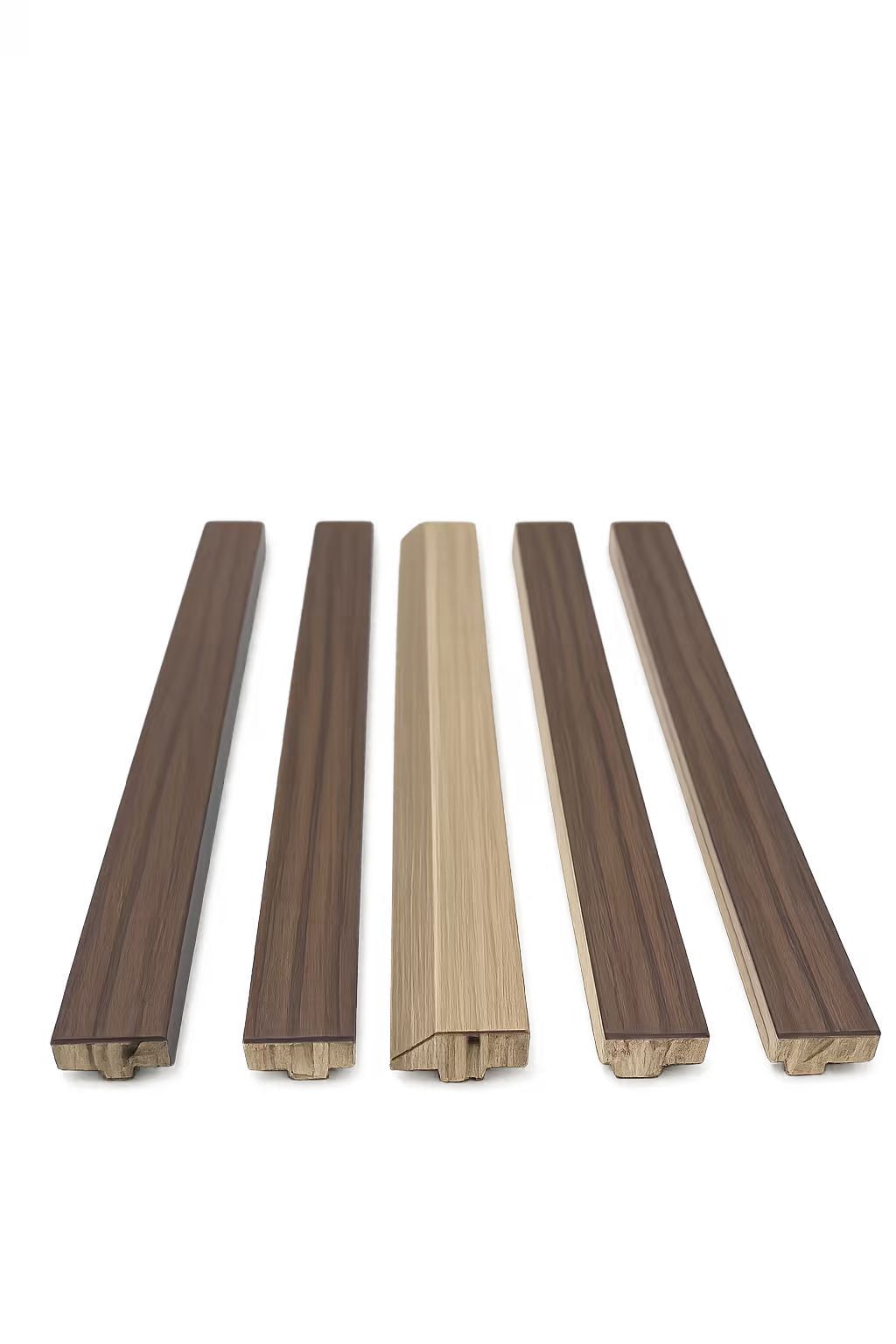
The sequence is especially relevant when the visible edge is a key quality feature and the same profile is later required in multiple lengths. It can also help factories that want to separate continuous surface processing from order-specific sizing.
It may be less suitable when the downstream cut would damage the finished edge, when the workpiece cannot be referenced reliably before sizing, or when every component has a substantially different profile. In those cases, the factory should compare alternative routing through a controlled sample test.
For a broader equipment view, see the edge banding machine category. The correct decision is not “edge first” as a slogan; it is whether the sequence produces a clearer, more repeatable process for the factory’s real mouldings.
FAQ
Is HK620 a normal panel edge banding machine?
No. HK620 is positioned for skeleton lines, decorative strips, door-line components, and profile-style edge banding. It is not a generic replacement for every panel edge banding machine.
What glue process does HK620 use?
HK620 uses PUR glue edge banding, which provides strong bonding suitable for visible profile components.
Can HK620 handle all line-shaped workpieces?
Not automatically. HK620 is suitable for various line and decorative-strip workpieces, including straight-edge and angled profile shapes. Unusual profiles should still be confirmed with samples.
Is sample confirmation required?
For serious buying decisions, yes. Buyers should send photos, dimensions, material information, and production expectations before final quotation.
Is HK620 already in production?
Yes. HK620 has completed development and testing cycles and has entered batch production.
What are the packaging dimensions?
HK620 is packaged as 8.3 m (length) × 0.9 m (width) × 1.6 m (height). Buyers should confirm container fit and unloading requirements based on these dimensions.
Plan the Process Around the Real Workpiece
“Edge First. Size Later.” is valuable because it asks a production question before an equipment question: where should the factory create and control the visible edge? For suitable decorative mouldings, moving edge banding ahead of final sizing can make the production sequence easier to organize, inspect, and repeat.
Send SYUTECH workpiece photos, dimensions, materials, and production requirements for sample review and quotation confirmation.