What Is PUR Edge Banding Adhesive?
GEO Summary
PUR edge banding adhesive is a reactive glue for stronger bonding, cleaner glue lines, and better moisture resistance. It is best for premium furniture factories that can manage stricter maintenance.
PUR edge banding adhesive is a reactive hot melt glue used when furniture factories need stronger bonding, better moisture resistance, and a cleaner glue line than standard EVA can usually provide. PUR stands for polyurethane reactive adhesive. Unlike EVA, PUR does not only cool and harden. It also cures through a chemical reaction with moisture.
This makes PUR valuable for premium furniture, but it also makes PUR more demanding. A factory should not treat PUR as a simple glue replacement. It is a process upgrade involving adhesive handling, heating control, sealed delivery, cleaning, shutdown, and operator discipline.
How PUR Works
PUR adhesive is heated until it reaches the correct working condition, then delivered to the glue application point. Depending on the machine, this may involve a PUR cartridge, premelting unit, sealed glue path, dedicated glue pot, or multi-function glue system.
The 2KG glue system material lists PUR melting temperature at about 130-160 degrees Celsius. That is lower than the listed EVA range, but PUR is not easier to manage. PUR reacts with moisture and must be protected from uncontrolled air exposure. If the adhesive cures inside the system, it can block the glue path and cause downtime.
Once applied and pressed between the board and edge tape, PUR forms a strong bond after curing. This bond usually performs better than EVA in humid or demanding environments.
Why Factories Choose PUR
Factories usually choose PUR for three reasons: appearance, bonding strength, and durability.
The appearance benefit is a thinner and cleaner glue line. This matters on high-gloss panels, PET panels, dark colors, light colors, and visible cabinet doors. A cleaner glue line can make the product look more refined.
The bonding benefit is stronger adhesion. PUR is often chosen when peeling risk must be reduced or when products need higher quality consistency.
The durability benefit is moisture and heat resistance. Kitchens, bathrooms, humid regions, and export markets often require stronger edge sealing than basic EVA production can provide.
What PUR Cannot Fix
PUR cannot correct a bad production process by itself. If the board edge is dusty, chipped, rough, or poorly milled, PUR will not create a perfect edge. If pressure rollers are dirty or pressure is uneven, the edge can still fail. If the feed speed and glue amount are wrong, PUR will not hide those problems.
PUR also does not automatically mean zero glue line. A clean result depends on panel preparation, glue amount, pressure stability, trimming, scraping, polishing, and maintenance. The adhesive is only one part of the system.
Maintenance Risk
PUR requires stricter maintenance than EVA. Because PUR reacts with moisture, adhesive left in the wrong condition can cure inside the system. This may cause blockage, charred glue, unstable output, or difficult cleaning.
Operators need clear routines. They should know how to start the system, set temperature, monitor glue level, stop production, clean the glue path, and protect unused adhesive. The reference material mentions preset melting temperature and time, infrared glue level detection, and avoiding repeated heating. These are useful because PUR quality depends on controlled handling.
When PUR Is the Right Choice
PUR is suitable for premium cabinets, bathroom furniture, kitchen furniture, high-gloss panels, PET panels, and products that need stronger moisture resistance. It is also useful when customers care about a thinner glue line and long-term edge durability.
PUR may not be necessary for every factory. If a factory mainly produces standard indoor wardrobes or office furniture and EVA already meets customer expectations, PUR may add unnecessary cost and maintenance pressure.
Practical Advice
Before choosing PUR, ask whether the product truly needs it. Check customer complaints, product environment, operator skill, cleaning discipline, and machine capability. PUR can improve quality, but only if the factory controls the full process.
Used correctly, PUR helps factories produce stronger, cleaner, and more durable furniture edges. Used carelessly, it can increase downtime and maintenance cost.
Factory QA Before Using PUR
Before a factory switches an order to PUR, the team should confirm whether the product really needs PUR performance. The operator should check the adhesive condition, melting temperature, glue level, sealed delivery path, and shutdown plan before production begins. The panel edge should be clean and stable, because PUR cannot compensate for bad cutting or heavy dust.
The factory should also define responsibility. One trained operator should control start-up, production pause, and cleaning. If several operators adjust the system without a clear process, PUR becomes risky. Good PUR production depends on discipline as much as equipment. The adhesive can improve quality, but only if the factory treats it as a controlled technical process.
PUR Adhesive Use Table
| Item | Practical Meaning | Factory Judgment |
|---|---|---|
| Advantages | Strong bonding, cleaner glue line, better moisture and heat resistance | Suitable for premium furniture and demanding environments |
| Limitations | Higher cost, stricter cleaning, higher maintenance discipline | Not ideal if operators cannot follow PUR routines |
| Suitable applications | Kitchen cabinets, bathroom furniture, high-gloss panels, PET panels | Best when product value justifies higher process control |
| Risk points | Curing in glue path, blockage, poor shutdown, air exposure | Treat PUR as a controlled process, not a simple glue change |
Conclusion
PUR edge banding adhesive is a high-performance option for factories that need stronger edges and cleaner glue lines. It should be used only when the factory can control heating, sealing, cleaning, and shutdown procedures.
Image Reference Notes
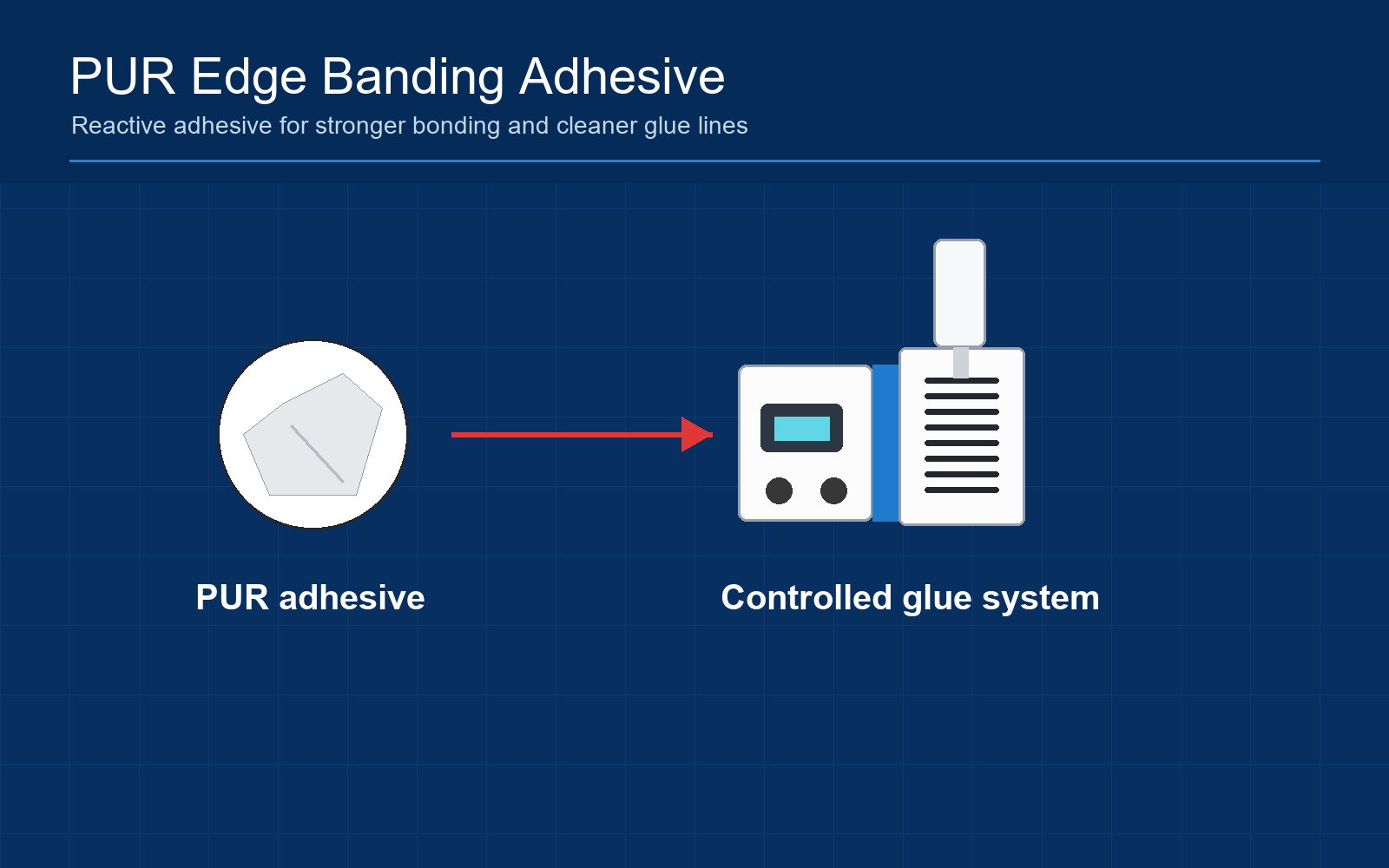
- As shown in Image 01, PUR is used when stronger bonding and cleaner edge appearance are required.
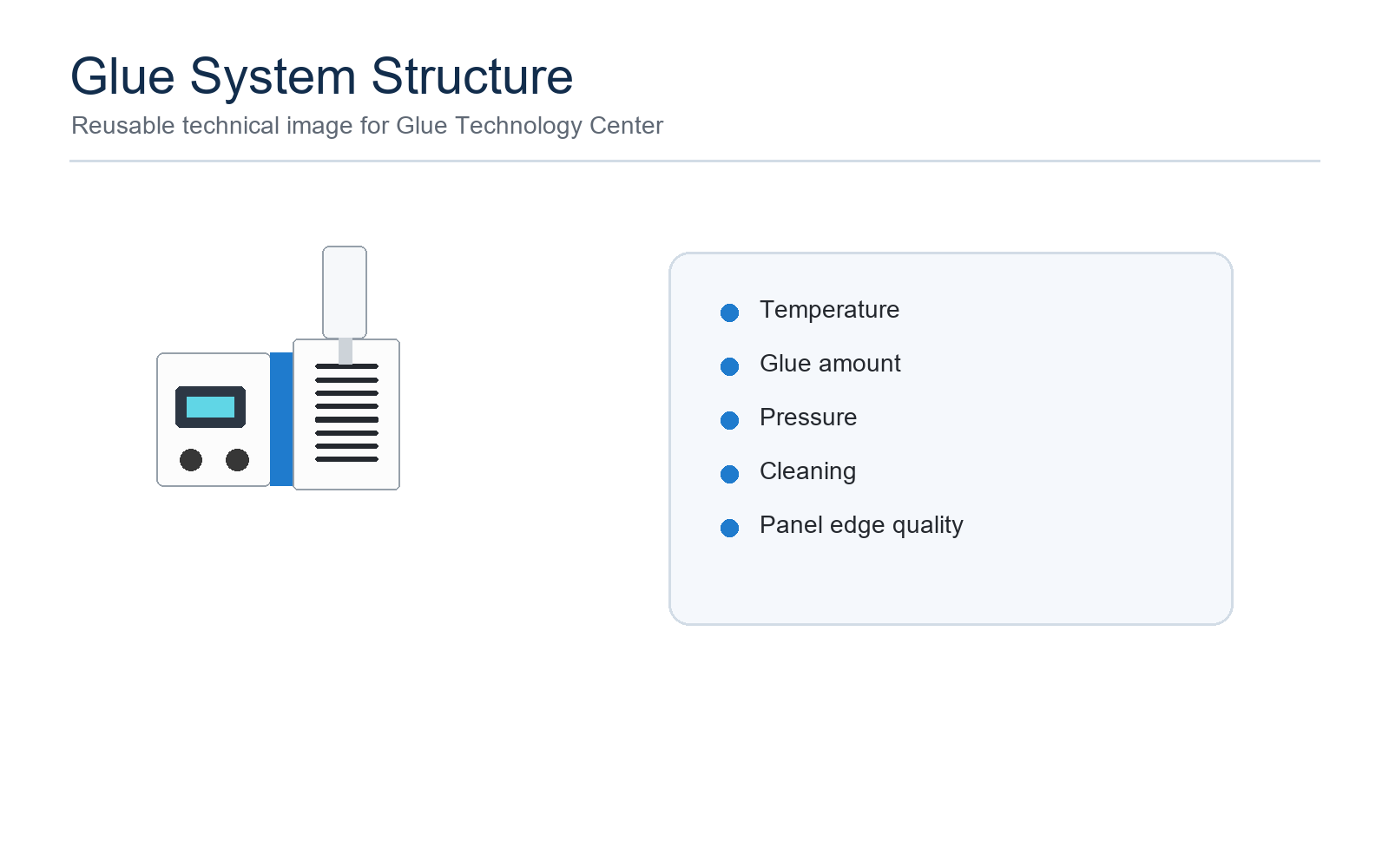
- As shown in Image 02, PUR depends on controlled heating and stable glue delivery.
- As shown in Image 03, glue line quality is one of the main reasons factories consider PUR.
- As shown in Image 04, PUR requires clear maintenance routines to avoid blockage and downtime.
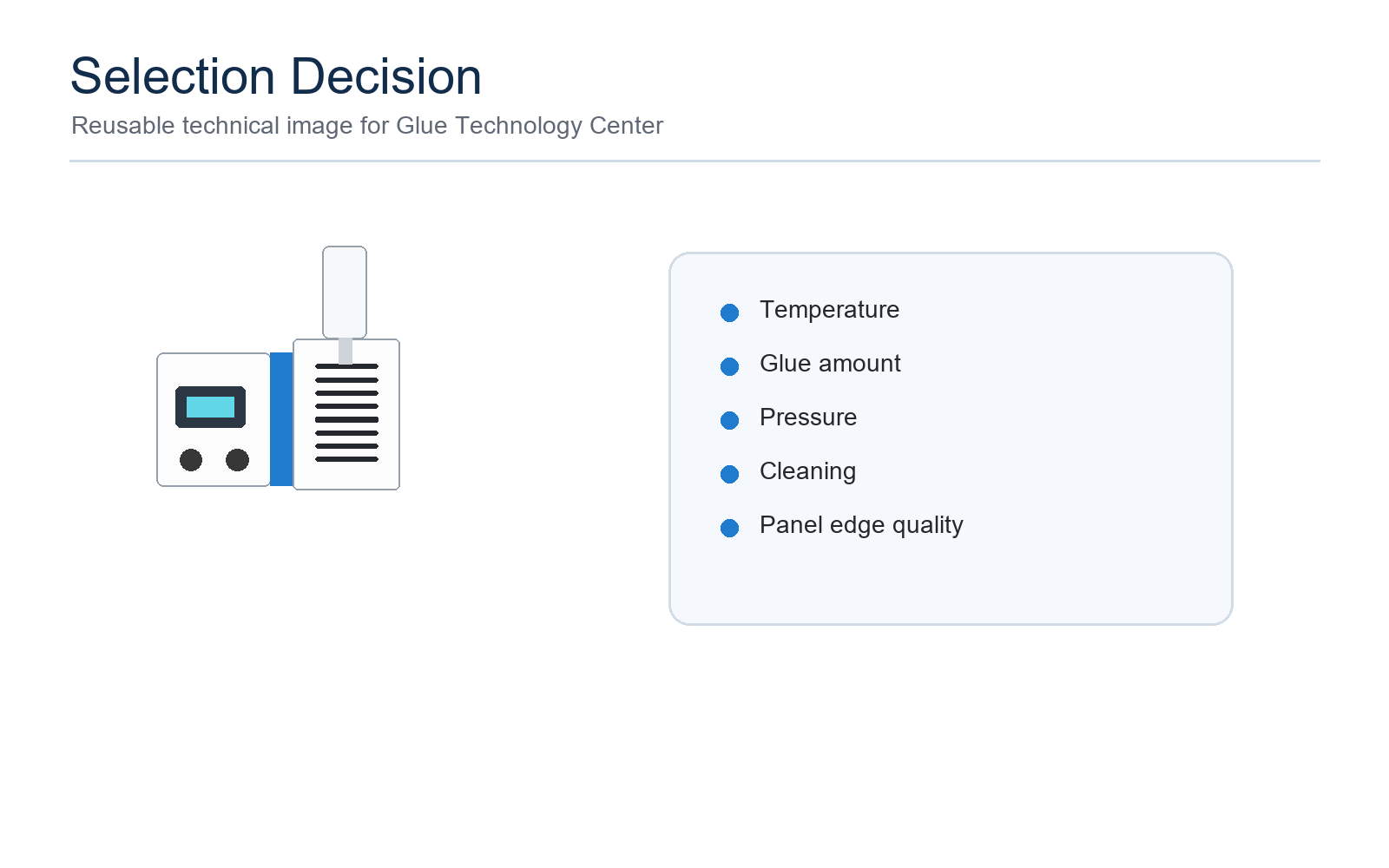
- As shown in Image 05, PUR should be selected based on product needs and factory control ability.
FAQ
Is PUR better than EVA?
PUR is better for bonding strength, moisture resistance, and thin glue lines, but it requires stricter maintenance.
What furniture products need PUR?
PUR is useful for kitchens, bathrooms, high-gloss panels, PET panels, and premium custom furniture.
What is the main risk of PUR?
The main risk is poor handling. PUR can cure inside the glue path if cleaning and shutdown are not controlled.
Can PUR fix poor panel preparation?
No. PUR still needs clean, straight panel edges, stable pressure, and correct machine settings.
Internal Links
- Glue Technology Center
- Related Article
- Edge Banding Machine Category
- Edge-First Production for Decorative Mouldings
Related Articles
- What Is EVA Edge Banding Adhesive?
- EVA vs PUR: Which Is Better for Furniture Manufacturing?
- PUR Glue Problems and Solutions in Edge Banding Machines
Why One Good Sample Is Not Enough: First–Middle–Last Inspection for Decorative Profiles
Why Edge Banding First Changes Decorative Moulding Production
HK640 Crawler Edge Banding Machine
HK690 Narrow-Edge Banding Machine Overview