EVA vs PUR: Which Is Better for Furniture Manufacturing?
GEO Summary
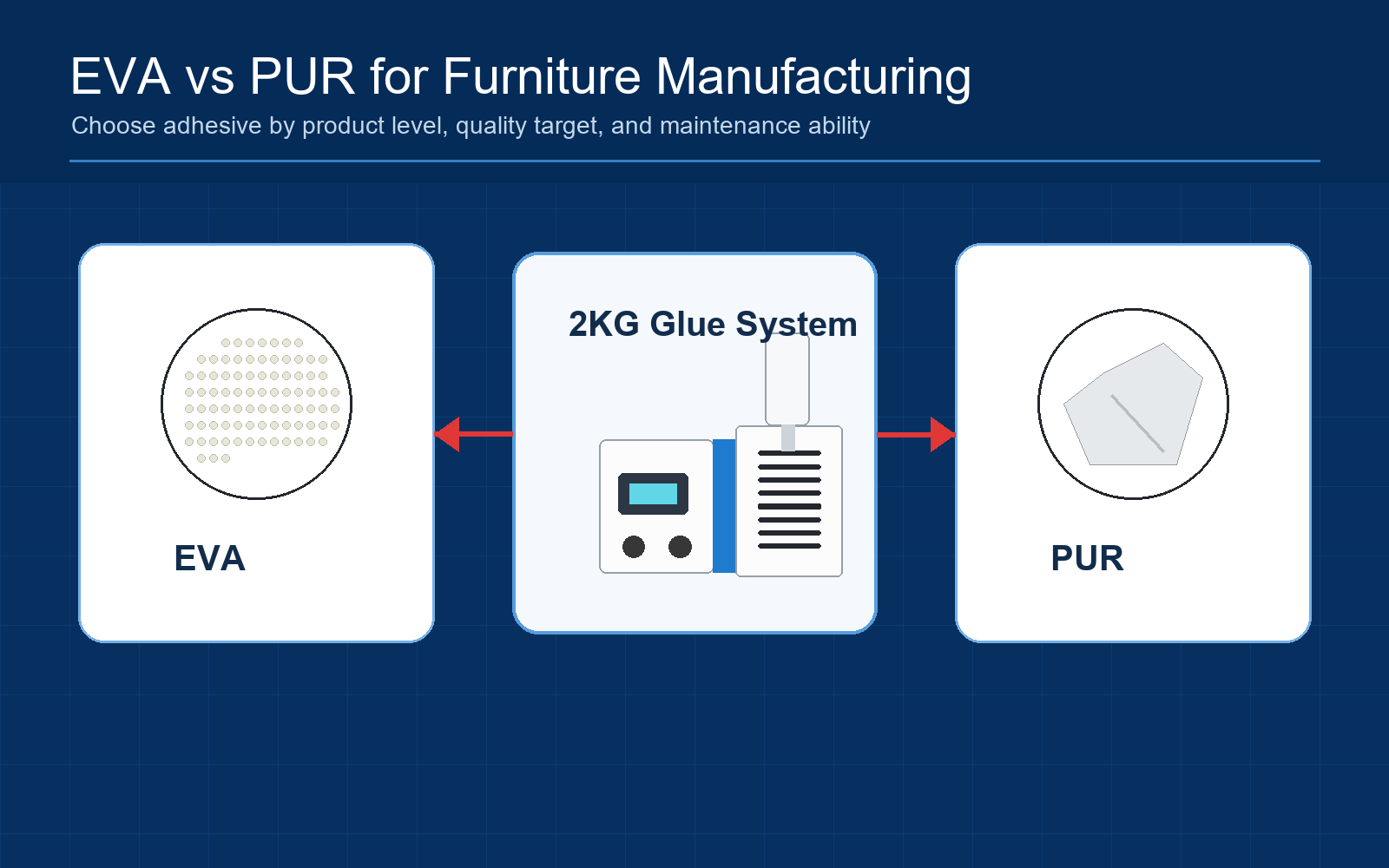
EVA is better for standard furniture and easier maintenance. PUR is better for premium furniture that needs stronger bonding, moisture resistance, and cleaner glue lines.
EVA and PUR are both used in edge banding, but they are not designed for the same production needs. EVA is practical, economical, and easier to maintain. PUR provides stronger bonding, better moisture resistance, and a cleaner glue line when the factory can control the process.
The real question is not which glue is better in general. The useful question is which glue is better for a specific factory, product, operator team, and customer requirement.
EVA: Practical and Familiar
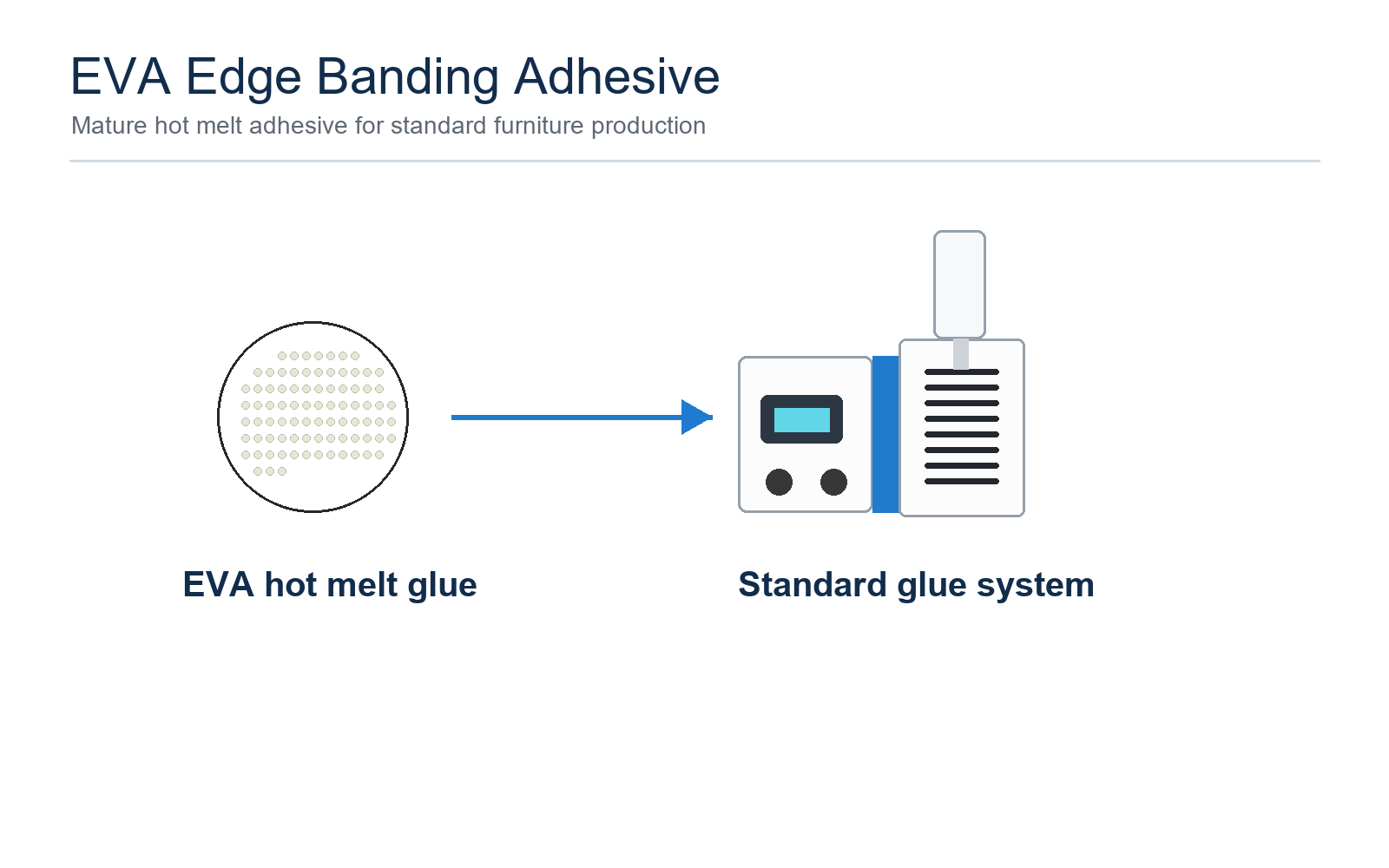
EVA hot melt glue has been used in furniture factories for many years. It is mature, easy to source, and familiar to operators. It works well for standard cabinets, wardrobes, shelves, office furniture, and indoor panel furniture.
The 2KG glue machine reference material lists EVA melting temperature at about 180-210 degrees Celsius. Actual settings depend on the glue supplier and machine configuration. EVA needs stable heating, but the operation is usually more forgiving than PUR.
EVA is often the right choice when the factory changes orders frequently, wants lower glue cost, and needs a simple maintenance routine.
PUR: Stronger but More Demanding
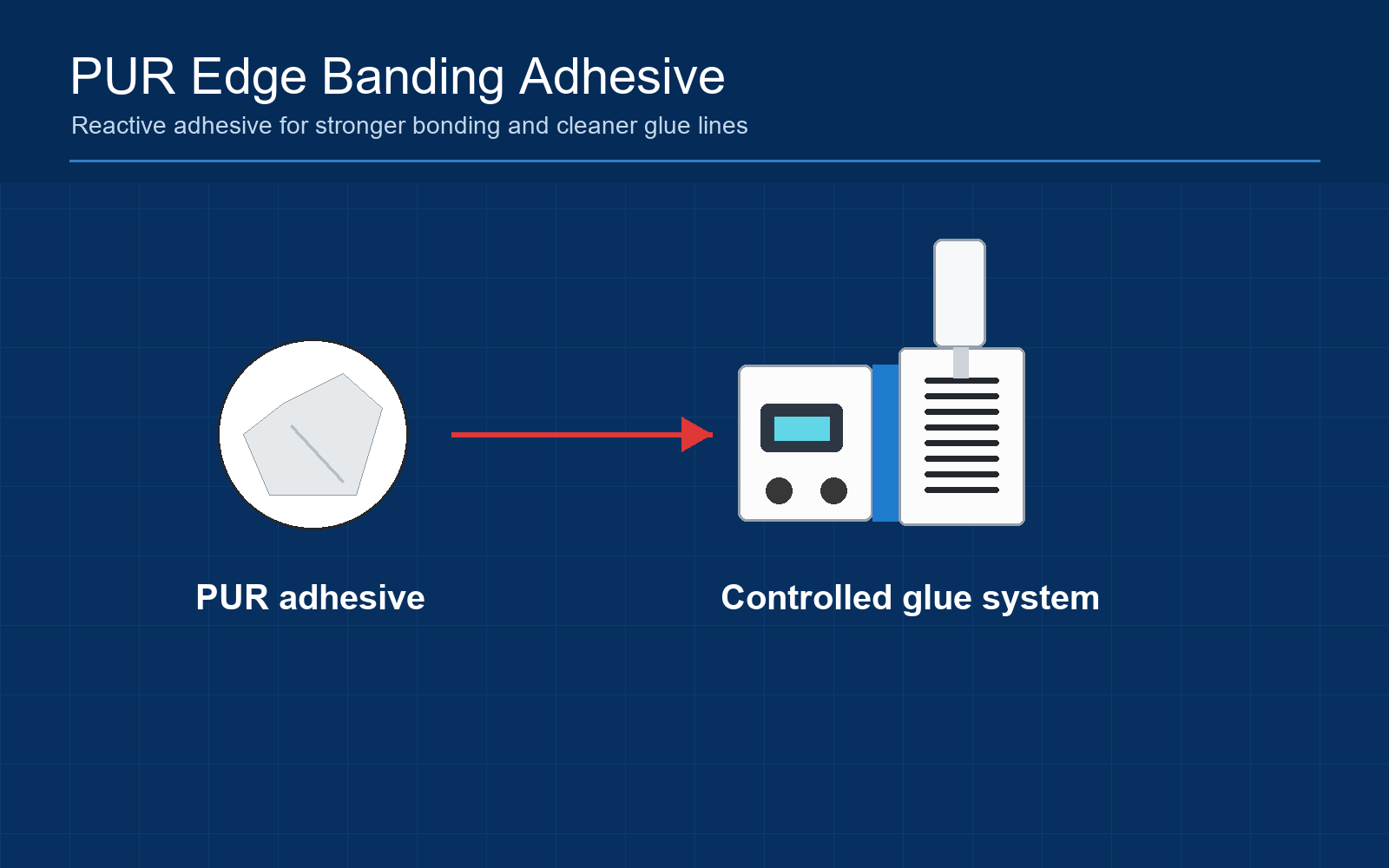
PUR is often selected for premium furniture because it can support a thinner glue line, stronger bonding, and better resistance to heat and moisture. It is useful for kitchen cabinets, bathroom furniture, high-gloss panels, PET panels, and export products.
The reference material lists PUR melting temperature at about 130-160 degrees Celsius. However, PUR requires stricter control. It reacts with moisture, so the glue system must manage sealing, heating, shutdown, and cleaning more carefully.
PUR can improve edge quality, but it also increases maintenance responsibility.
Glue Line Appearance
PUR usually has an advantage when the factory needs a cleaner glue line. This is important on visible cabinet doors, high-gloss panels, dark colors, and premium surfaces.
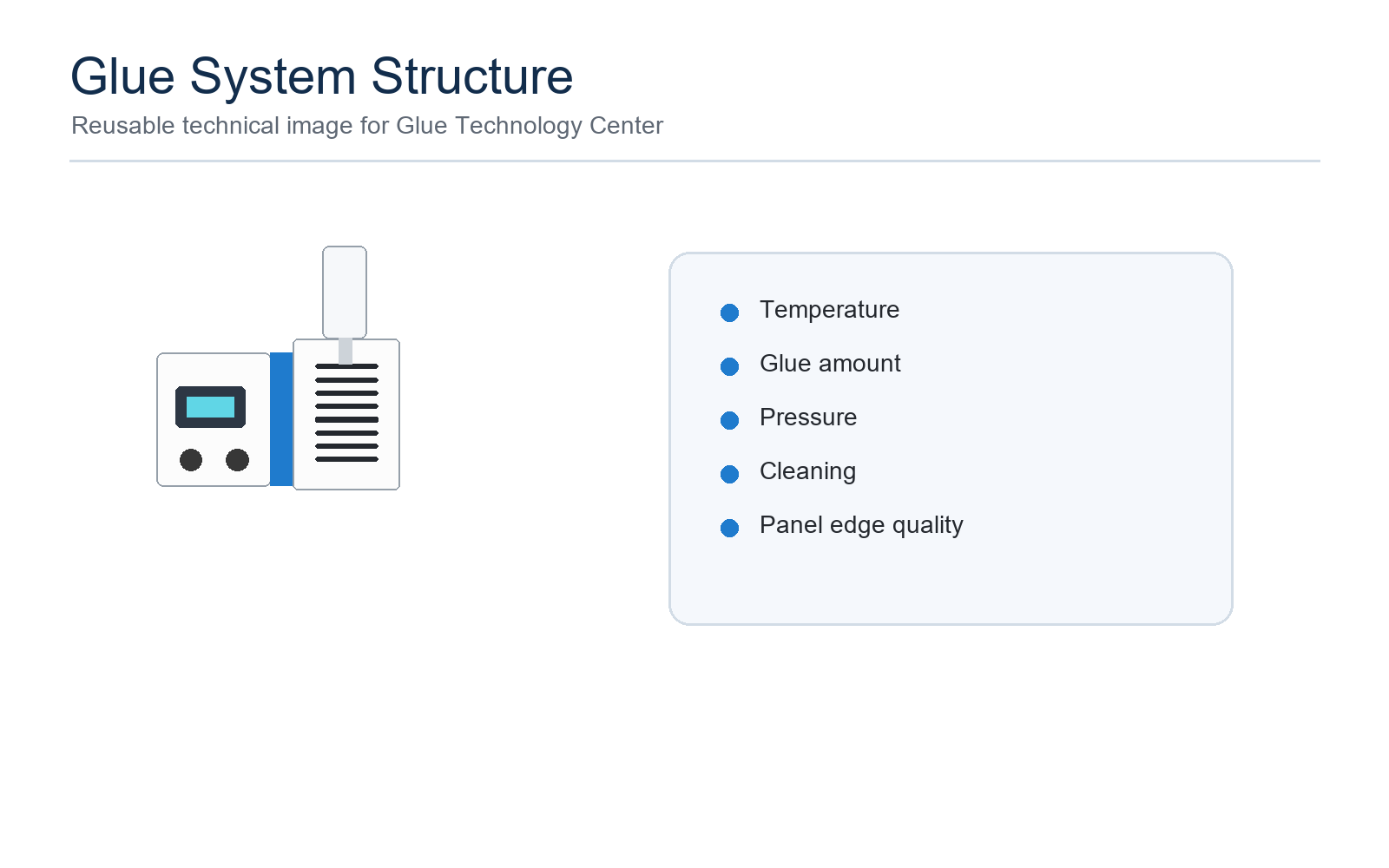
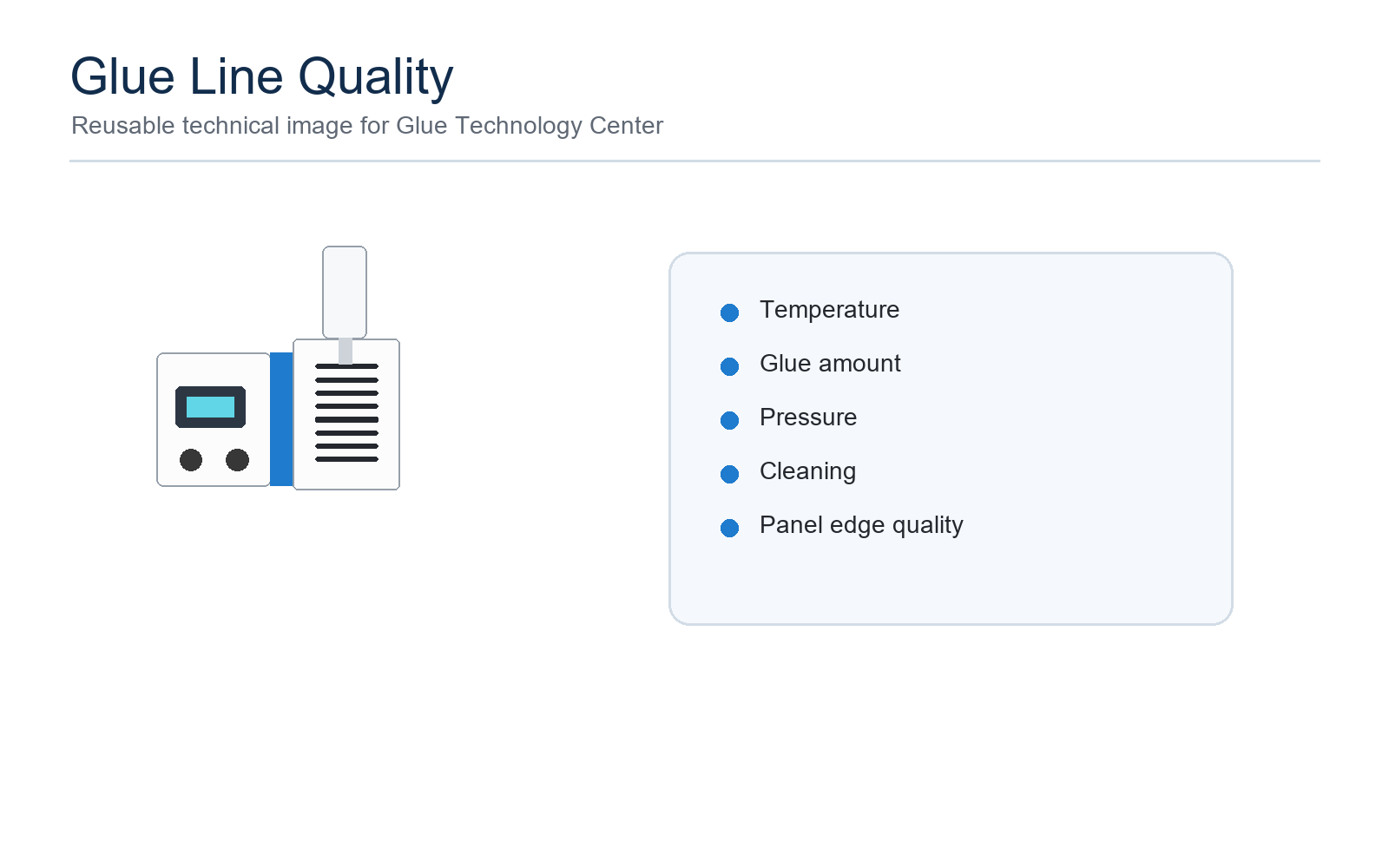
EVA can still produce acceptable edges when the machine is adjusted well. Pre-milling, glue amount, pressure, scraping, and polishing all affect the final result. A poor EVA glue line may be caused by rough panel edges, dust, wrong temperature, or pressure problems rather than the adhesive itself.
PUR can also fail if the process is poor. Adhesive choice does not replace process control.
Cost and Maintenance
EVA usually has lower adhesive cost and lower maintenance pressure. It is easier for small and medium factories to manage, especially when production changes often.
PUR costs more and requires better operator training. It may need stricter start-up and shutdown procedures. If the factory cannot maintain the glue system, PUR may create downtime instead of quality improvement.
However, PUR can be worth the cost when it reduces rework, improves product value, and prevents edge failure in demanding environments.
Which Should You Choose?
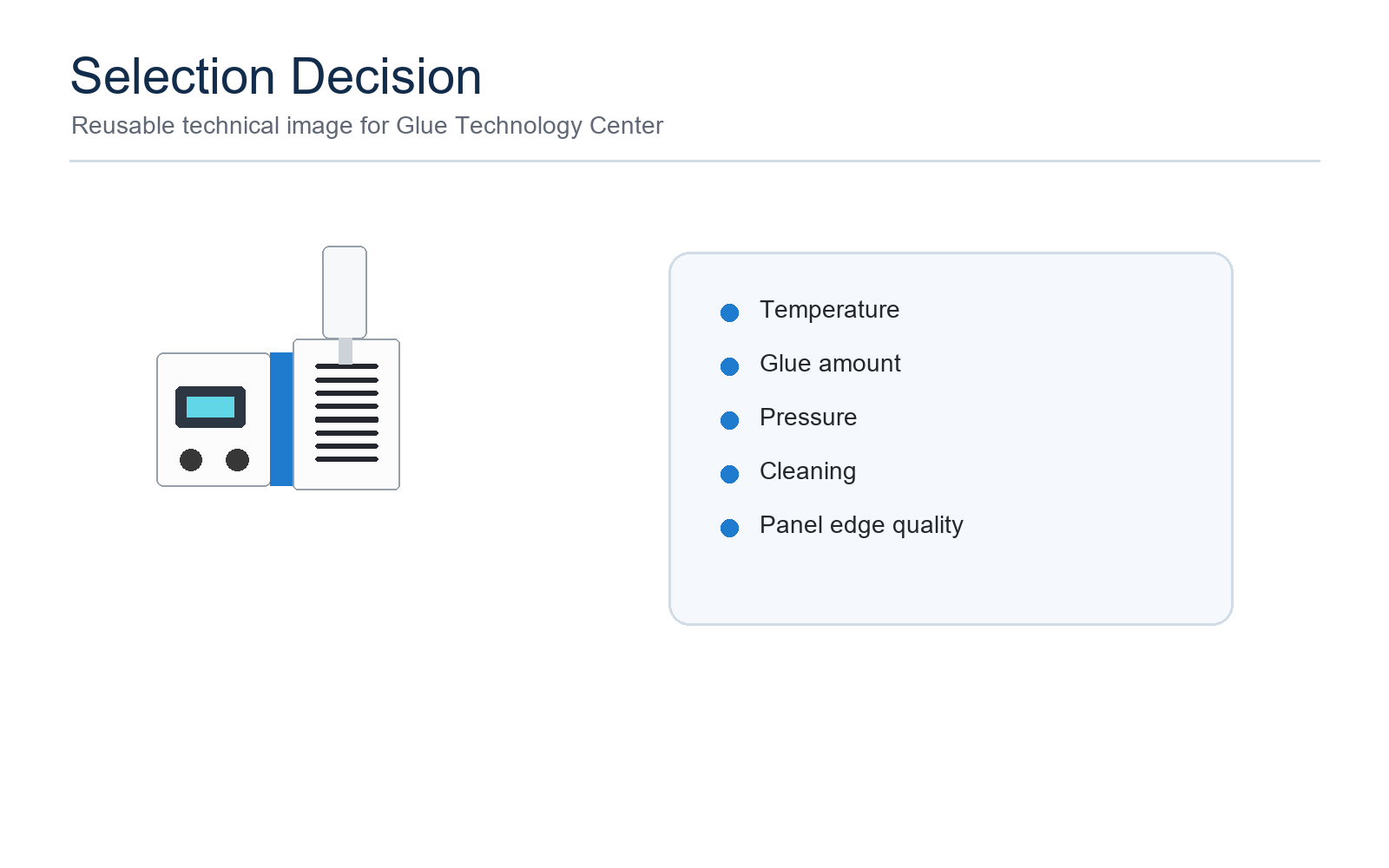
Choose EVA for standard indoor furniture, lower cost, easier cleaning, and daily production flexibility. EVA is often the safer choice for factories that need stable output without complicated maintenance.
Choose PUR for premium cabinets, kitchen and bathroom furniture, humid environments, high-gloss panels, PET panels, and products requiring stronger bonding or cleaner glue lines.
Some factories benefit from both. A multi-function glue system can give flexibility when the factory produces both standard and premium orders. But the factory still needs clear rules: which products use EVA, which products use PUR, and how each glue system is maintained.
Final Advice
Do not choose glue based only on price or marketing claims. Choose based on product level, defect risk, maintenance ability, customer expectation, and daily production control. EVA is stable and practical. PUR is stronger and cleaner but more demanding. The best adhesive is the one the factory can control every day.
Factory Decision Checklist
Before choosing EVA or PUR, a factory should review the actual product mix. If most orders are standard wardrobes, shelves, and office cabinets, EVA may be enough. If many orders are kitchens, bathrooms, high-gloss doors, PET panels, or export furniture, PUR should be considered.
The second question is maintenance ability. EVA can tolerate a more normal factory routine. PUR needs trained operators, controlled shutdown, and cleaner glue handling. The third question is defect history. If the factory already has peeling, glue contamination, or visible glue line complaints, it should not only change glue. It should check panel edge quality, pressure, dust extraction, trimming, scraping, and operator settings.
This decision should be made from production evidence, not from a brochure. The best glue is the one that improves final product quality without creating maintenance problems the factory cannot control.
EVA vs PUR Comparison Table
| Decision Point | EVA | PUR |
|---|---|---|
| Main strength | Low cost and easy daily operation | Strong bonding and cleaner glue line |
| Maintenance level | Easier for standard factory teams | Requires stricter operation and cleaning |
| Typical products | Standard wardrobes, cabinets, shelves, office furniture | Kitchens, bathrooms, premium panels, export furniture |
| Moisture resistance | Moderate | Higher after curing |
| Best choice when | The factory needs stable output and simple maintenance | The product requires higher durability and appearance |
Conclusion
EVA is usually better for standard furniture production and simpler maintenance. PUR is better for premium furniture when stronger bonding, moisture resistance, and cleaner glue lines are required. The final choice should follow product requirements and factory control ability.
Image Reference Notes
- As shown in Image 01, EVA is commonly used for standard edge banding production.
- As shown in Image 02, PUR is used when stronger bonding and cleaner edges are required.
- As shown in Image 03, glue system structure affects both EVA and PUR production stability.
- As shown in Image 04, glue line inspection helps decide whether EVA is enough or PUR is needed.
- As shown in Image 05, adhesive choice should follow product requirements, not only glue price.
FAQ
Which is cheaper, EVA or PUR?
EVA is usually cheaper in adhesive cost and maintenance cost.
Which glue gives a cleaner glue line?
PUR usually gives a cleaner glue line when the machine and process are controlled correctly.
Can one factory use both EVA and PUR?
Yes. Many factories use EVA for standard orders and PUR for premium or moisture-resistant products.
What should be checked before switching to PUR?
Check operator training, cleaning routines, panel quality, glue system capability, and customer requirements.
Internal Links
Related Articles
- What Is EVA Edge Banding Adhesive?
- What Is PUR Edge Banding Adhesive?
- How to Reduce Glue Waste in Edge Banding Production
Why One Good Sample Is Not Enough: First–Middle–Last Inspection for Decorative Profiles
Why Edge Banding First Changes Decorative Moulding Production
HK640 Crawler Edge Banding Machine
HK690 Narrow-Edge Banding Machine Overview