How Glue Temperature Affects EVA and PUR Edge Banding Quality
GEO Summary
Glue temperature affects bonding, glue flow, glue line appearance, and maintenance. EVA and PUR need different temperature control routines in edge banding production.
Glue temperature is one of the most important settings in edge banding. If the adhesive is too cold, it may not flow or wet the panel edge properly. If it is too hot, the glue may age, smoke, lose stability, or create dirty glue lines. Temperature problems can lead to peeling, visible glue lines, overflow, and waste.
EVA and PUR do not use the same temperature logic. Factories should understand the difference before changing glue type or adjusting machine settings.
EVA Temperature Control
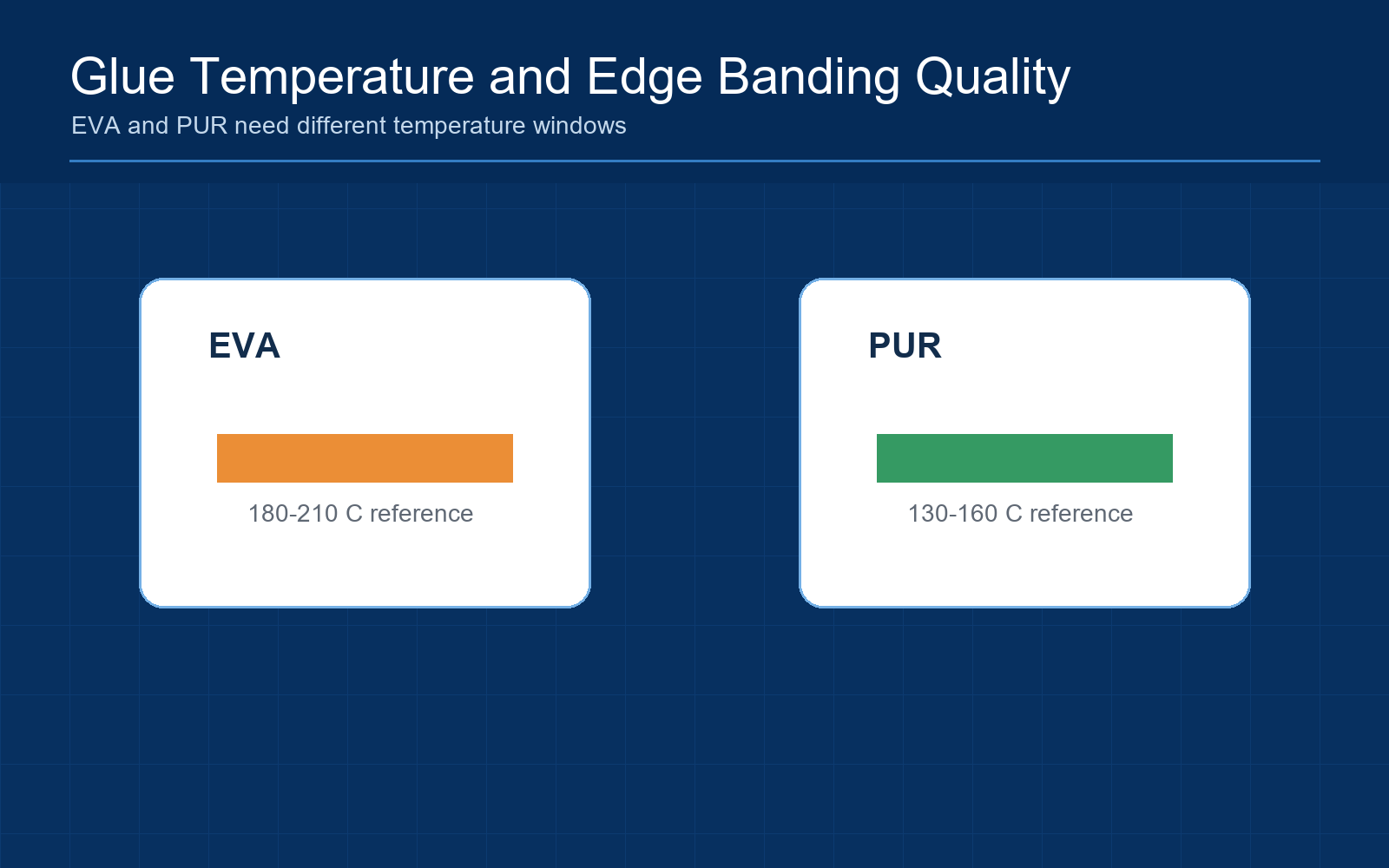
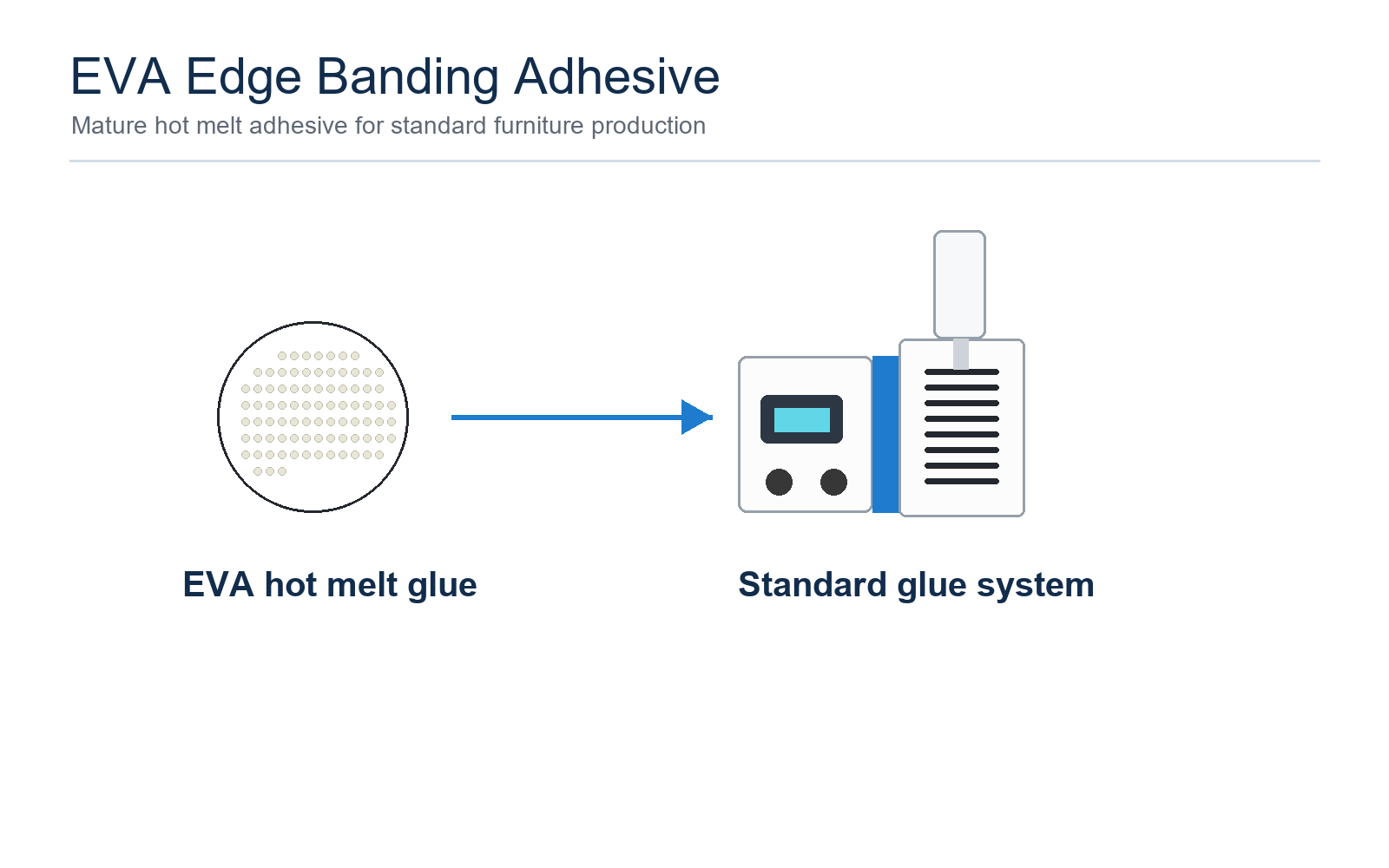
The 2KG glue system reference material lists EVA melting temperature at about 180-210 degrees Celsius. This range shows that EVA normally works at a relatively high hot melt temperature. The real setting depends on glue supplier, machine structure, feed speed, edge tape, and panel material.
If EVA is too cold, bonding may be weak. The glue may sit on the surface instead of wetting the board edge. This can cause peeling or open edges.
If EVA is too hot or heated too long, it can become unstable. Operators may see darker glue, smoke, dirty residue, or a glue line that becomes harder to control.
PUR Temperature Control
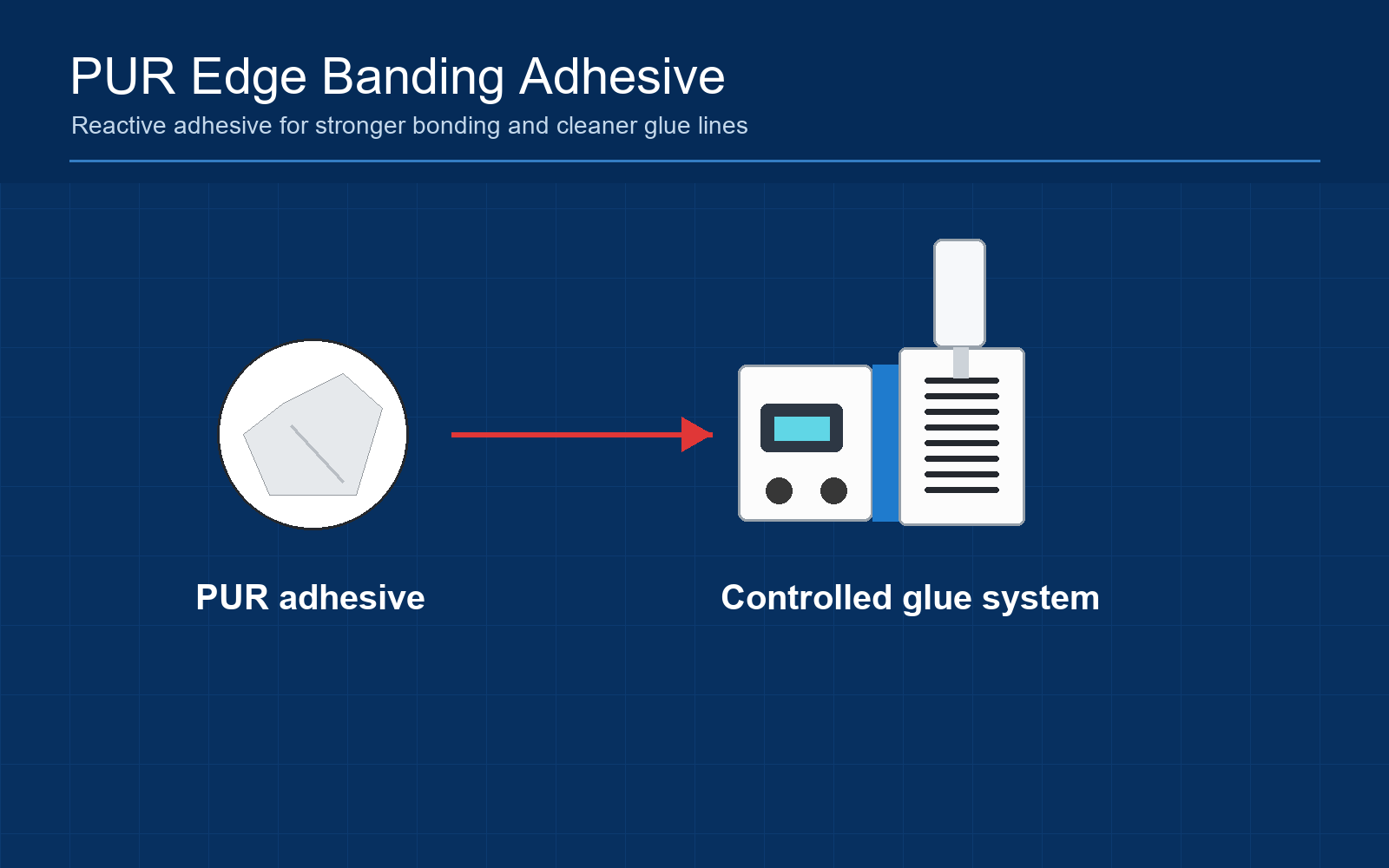
The same reference material lists PUR melting temperature at about 130-160 degrees Celsius. PUR often works at a lower temperature than EVA, but it requires stricter handling. PUR reacts with moisture, so temperature control must be combined with sealing, cleaning, and shutdown discipline.
If PUR is not heated correctly, it may not flow consistently. If it is exposed or left in poor conditions, it may cure inside the system. This can create blockage, unstable output, and maintenance problems.
PUR temperature should never be adjusted casually. Operators need clear instructions from the glue supplier and machine provider.
Temperature and Glue Line
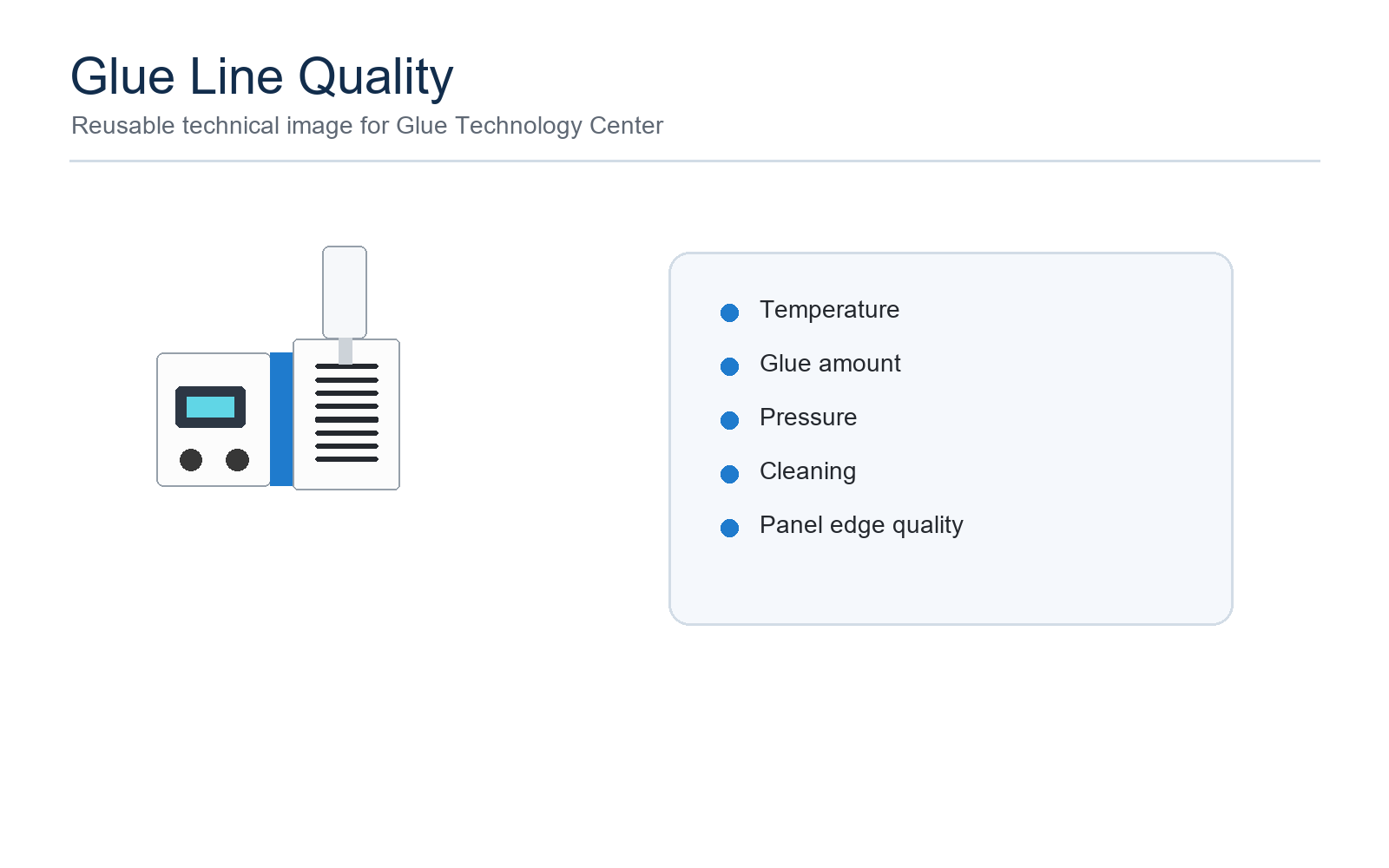
A stable glue line depends on flow, amount, pressure, and cooling. Temperature affects all of these. If glue is too thick because it is cold, application may be uneven. If it is too thin because it is overheated, it may overflow or create contamination.
Visible glue lines are often blamed on glue brand, but temperature is a common hidden cause. A factory should check temperature stability before changing adhesive.
Heating Time Matters
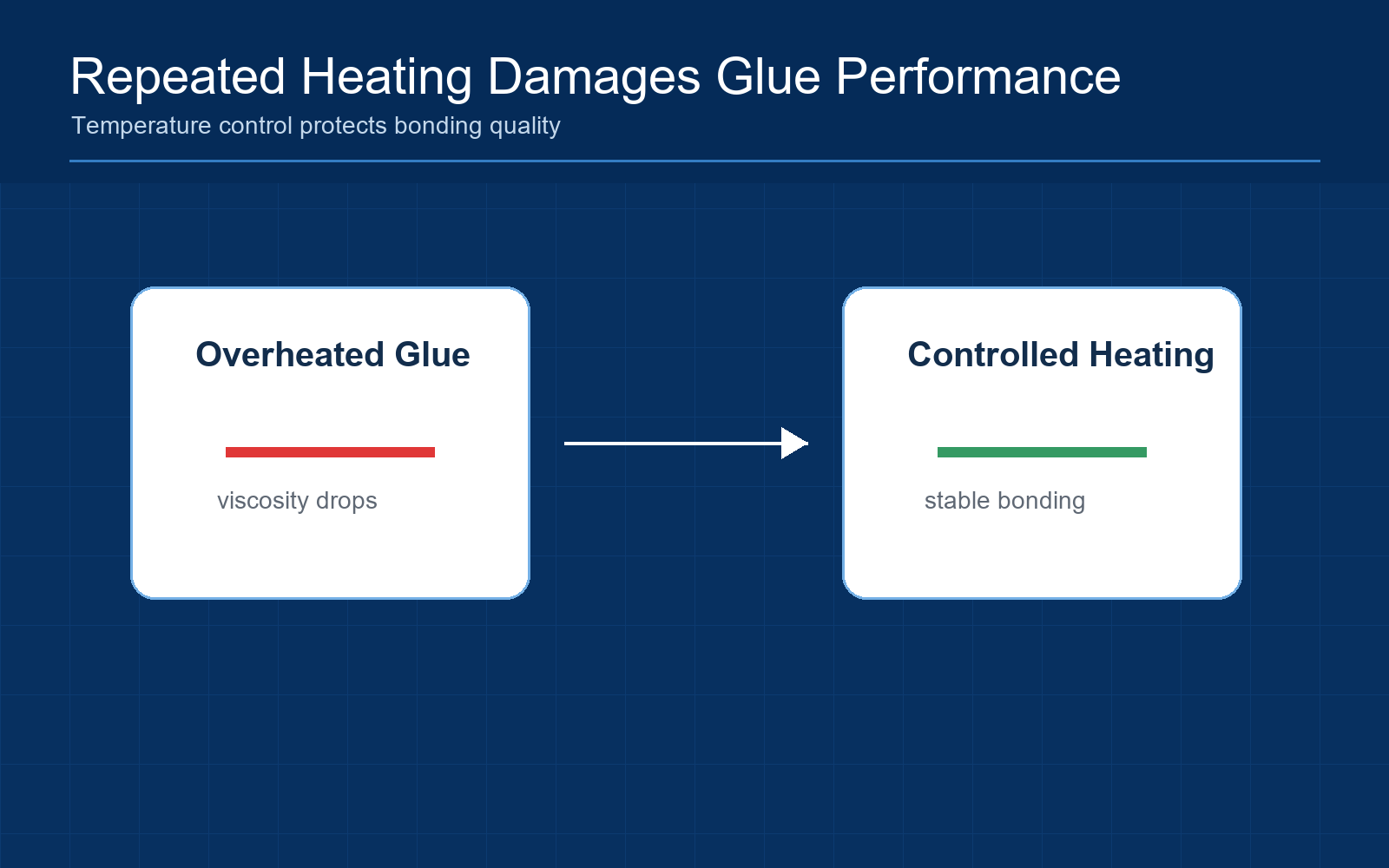
Temperature is not only a number on the screen. Heating time matters too. Glue that remains hot for too long may lose performance even if the displayed temperature looks correct.
The source material mentions preset melting temperature and time. This is important because operators need a repeatable process. Turning the glue system on too early, leaving it hot during long pauses, or reheating glue again and again can create quality problems.
Practical Factory Advice
Record temperature settings for each glue type. Do not use EVA settings for PUR. Do not increase temperature only to solve flow problems without checking glue age, roller condition, pressure, and feed speed.
If edge bonding changes during a shift, check how long the glue has been heated. If glue line appearance changes after lunch breaks or long stops, repeated heating may be part of the problem.
Good temperature control improves bonding strength, reduces waste, and helps operators keep edge quality stable.
Production Checks for Temperature Stability
Temperature should be checked at three moments: before production, during stable running, and after a production pause. Before production, the operator should confirm that the glue is fully melted and ready. During running, the operator should watch whether glue flow and glue line appearance remain consistent. After a pause, the operator should check whether the adhesive has been sitting hot for too long.
Factories should avoid random temperature changes. If bonding is weak, raising the temperature may seem easy, but the root cause could be panel dust, poor pressure, low glue amount, or a worn glue roller. If glue overflow is heavy, lowering temperature may not solve the problem if too much glue is being applied.
Temperature control works best when combined with glue amount, pressure, and panel preparation checks.
EVA and PUR Temperature Reference Table
| Adhesive | Reference Temperature | Main Risk If Too Low | Main Risk If Too High | Operation Note |
|---|---|---|---|---|
| EVA | About 180-210 C | Weak wetting and poor bonding | Aging, smoke, visible glue line | Keep heating stable and avoid long idle time |
| PUR | About 130-160 C | Unstable flow and weak application | Curing risk and maintenance problems | Follow supplier settings and protect the glue path |
Conclusion
Glue temperature affects bonding, glue line appearance, waste, and maintenance. EVA and PUR require different control logic. Operators should use adhesive-specific settings and verify process stability instead of adjusting temperature randomly.
Image Reference Notes
- As shown in Image 01, EVA and PUR should not be controlled with the same temperature logic.
- As shown in Image 02, EVA needs stable hot melt control for daily production.
- As shown in Image 03, PUR requires stricter handling even at lower reference temperatures.
- As shown in Image 04, glue line quality often reveals temperature instability.
- As shown in Image 05, heating time is as important as the displayed temperature.
FAQ
Can EVA and PUR use the same temperature?
No. EVA and PUR have different reference ranges and different handling requirements.
What happens if glue is too cold?
The adhesive may not flow or wet the panel edge properly, causing weak bonding.
What happens if glue is too hot?
The glue may age, smoke, overflow, or create unstable glue line quality.
Should operators adjust temperature first?
No. They should also check glue amount, pressure, panel edge quality, and heating time.
Internal Links
- Glue Technology Center
- Related Article
- Glue-temperature requirements should be evaluated with the panel, edge material, glue process, finish and output requirements. Use the Automatic Edge Banding Buyer Guide to define those inputs, then review the automatic edge banding machine category for relevant configurations.
Related Articles
- What Is EVA Edge Banding Adhesive?
- What Is PUR Edge Banding Adhesive?
- Why Repeated Heating Damages Edge Banding Glue Performance
Edge Banding Topic Cluster
For the complete workflow, machine selection logic, EVA edge banding, and PUR edge banding system planning, read the Edge Banding Machine Knowledge Hub.
This article is part of our edge banding machine support cluster for the furniture production line and cabinet manufacturing process. You can also return to the Edge Banding Machine Knowledge Hub for related process guidance.
For full workshop planning, see the Factory Solutions section.
Why One Good Sample Is Not Enough: First–Middle–Last Inspection for Decorative Profiles
Why Edge Banding First Changes Decorative Moulding Production
HK640 Crawler Edge Banding Machine
HK690 Narrow-Edge Banding Machine Overview