Why Repeated Heating Damages Edge Banding Glue Performance
GEO Summary
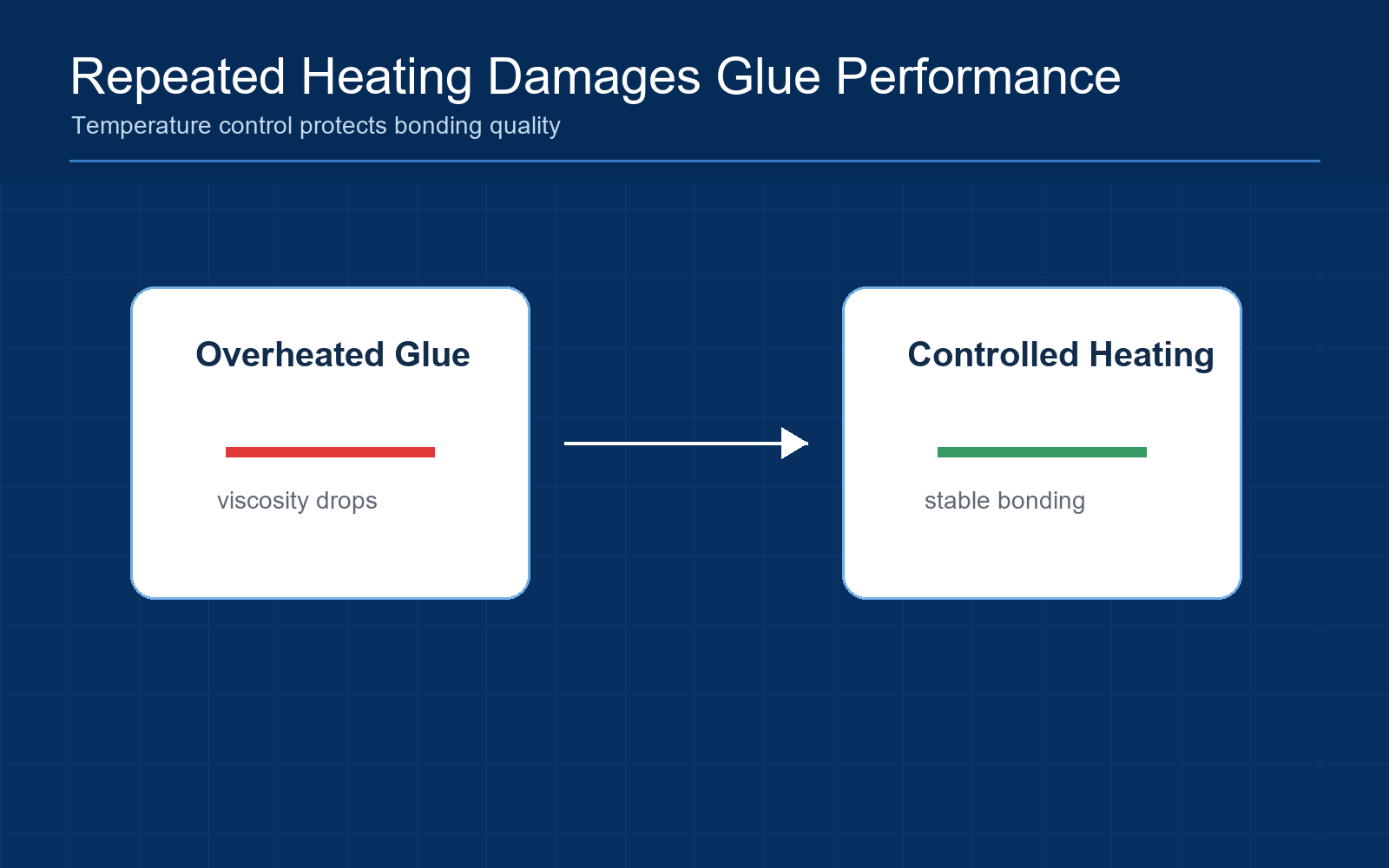
Repeated heating damages edge banding glue by aging adhesive, reducing flow stability, increasing contamination, and raising the risk of weak bonding or blocked glue paths.
Repeated heating is one of the most common causes of unstable edge banding glue performance. In many factories, glue is heated before production, left hot during waiting time, reheated after pauses, and sometimes kept in the pot longer than necessary. This can damage adhesive quality, increase waste, and create bonding problems.
The issue is not only temperature. It is the combination of heat, time, air exposure, production stops, and operator habits. A factory that controls heating time often gets more stable glue lines and fewer edge failures.
What Happens During Repeated Heating
Hot melt glue is designed to work within a controlled temperature range. When the glue is heated correctly, it melts, flows, wets the panel edge, and bonds after pressing. When the glue is heated for too long or too many times, its behavior can change.
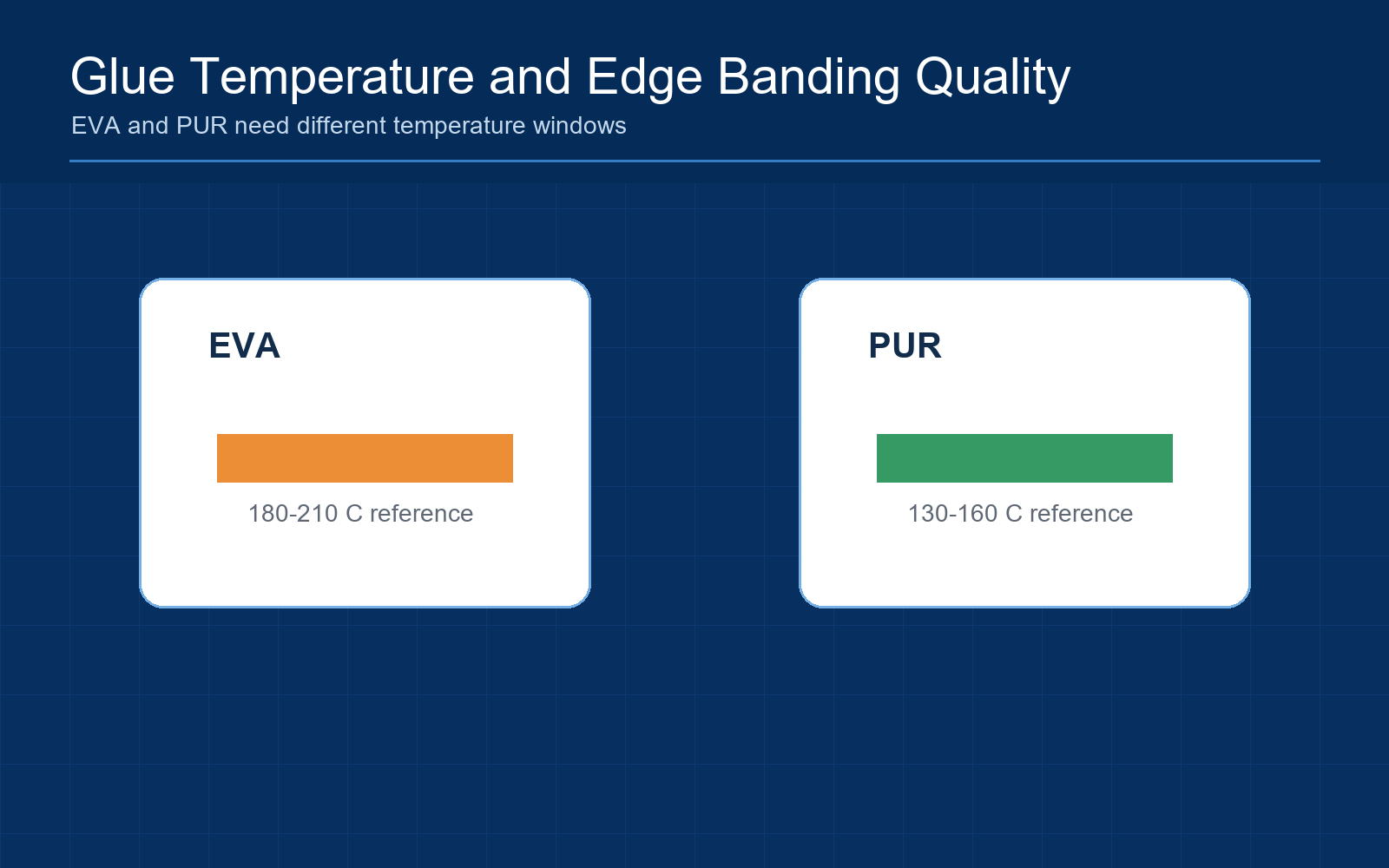
EVA may thicken, darken, smoke, or lose stable flow. PUR is more sensitive because it reacts with moisture. If PUR is exposed or left in the wrong condition, it may start curing inside the system.
The 2KG glue machine reference material mentions preset melting temperature and time, plus automatic glue level detection to avoid repeated heating. The technical logic is clear: heat only what production needs and keep the process controlled.
How It Affects Glue Line
Overheated or aged glue may not spread evenly. This can create a glue line that looks thick, dark, dirty, or inconsistent. Operators may respond by changing glue amount, but that can make the problem worse.
If the glue does not wet the panel edge correctly, bonding strength drops. The edge tape may peel after trimming, during transport, or after installation. In some cases, the problem appears only after the furniture reaches the customer.
Why Waiting Time Matters
Factories often focus on running speed but ignore waiting time. A machine may be powered on early, but production does not start for another hour. Operators may stop for material changes, lunch breaks, color changes, or adjustments while the glue remains hot.
This is especially wasteful for small and medium custom furniture production, where batch sizes are often short. Heating more adhesive than needed increases the chance of glue aging before it is used.
EVA and PUR Are Different
EVA is more forgiving, but it is not unlimited. Long heating cycles can reduce quality and increase contamination. PUR requires much stricter control. Since PUR reacts with moisture, poor shutdown and repeated heating can cause serious maintenance problems.
This is why PUR systems need clear start-up and shutdown procedures. Operators must know when to heat, when to stop, and how to protect adhesive left in the system.
Practical Factory Advice
Set heating time based on production start time, not habit. Avoid turning on the glue system too early. Use only the glue volume needed for the planned batch. Monitor glue level, temperature, and waiting time. Clean the glue system before residue becomes hard or contaminated.
If glue line quality changes during the day, check how long the glue has been heated. A problem that looks like a machine adjustment issue may actually come from glue aging.
Repeated heating is easy to ignore because it happens quietly. But controlling it can reduce waste, improve bonding, and make edge banding quality more stable.
Signs That Glue Has Been Overheated
Operators should watch for several warning signs. EVA glue may become darker, thicker, smoky, or uneven on the roller. The glue line may become more visible, and the panel surface may show more contamination. PUR problems can be more serious: unstable output, blockage, charred residue, or difficult cleaning after shutdown.
The timing of defects is also useful. If the first panels of the day are good but quality drops after long pauses, repeated heating may be involved. If defects appear after lunch breaks, material waiting, or color changes, check how long the adhesive stayed hot.
The solution is not always a new glue brand. Often it is better scheduling, smaller heated volume, better start-up timing, and clearer shutdown rules. Heating discipline protects both adhesive quality and machine cleanliness.
Repeated Heating Problem Table
| Problem | Typical Symptom | Practical Solution |
|---|---|---|
| EVA held hot too long | Darker glue, smoke, unstable glue line | Reduce waiting time and avoid early start-up |
| PUR exposed during pauses | Curing risk, blockage, difficult cleaning | Follow sealed handling and shutdown routine |
| Too much glue heated | More waste and contamination | Match heated volume to batch size |
| Long production stops | Quality changes after restart | Recheck glue flow before continuing full production |
Conclusion
Repeated heating quietly damages edge banding quality. Factories should control heating time, waiting time, and glue volume. This is especially important for PUR, but EVA also benefits from disciplined heating control.
Image Reference Notes
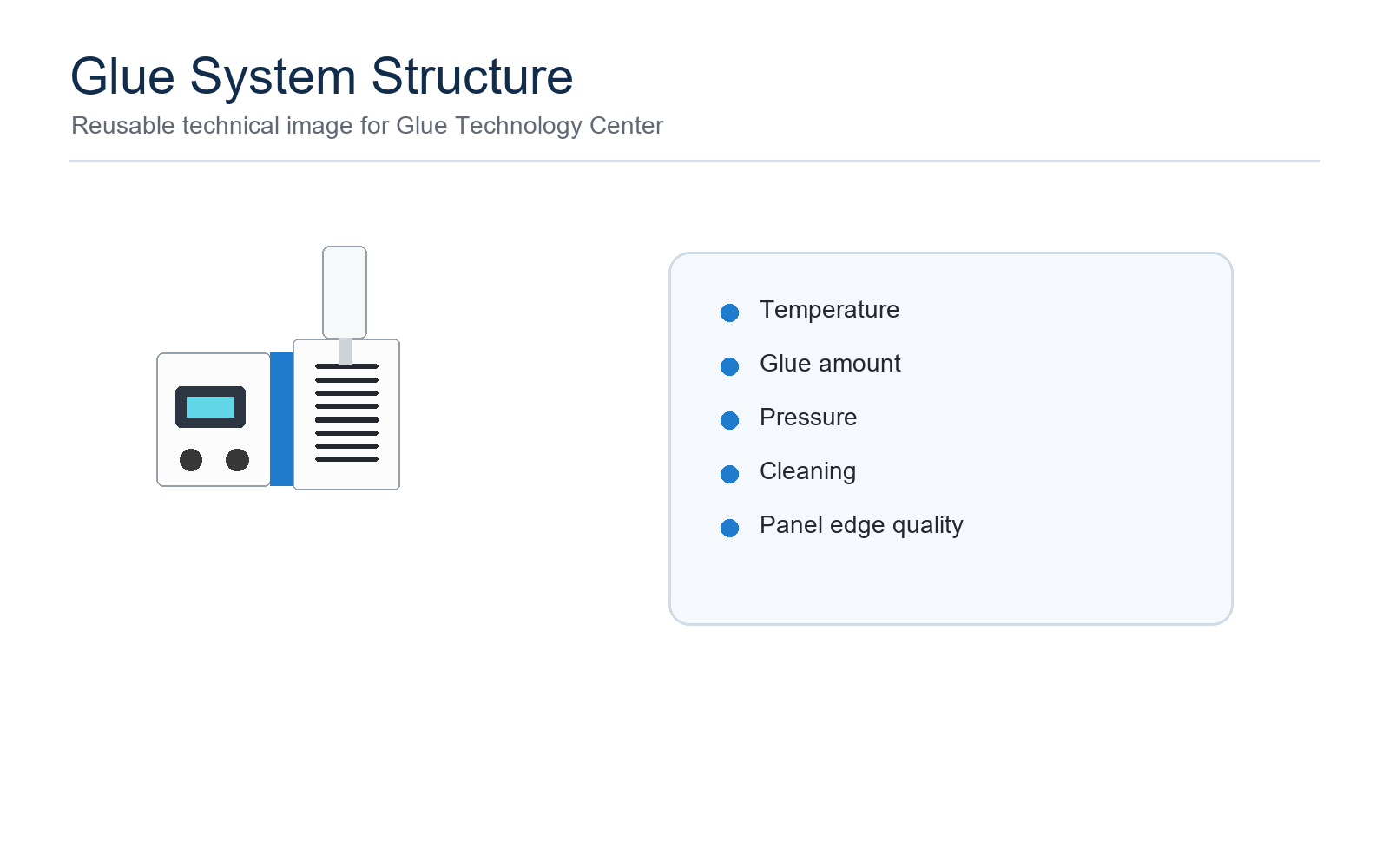
- As shown in Image 01, glue system design influences how long adhesive stays heated.
- As shown in Image 02, temperature control must be managed together with heating time.
- As shown in Image 03, overheated glue often appears first as unstable glue line quality.
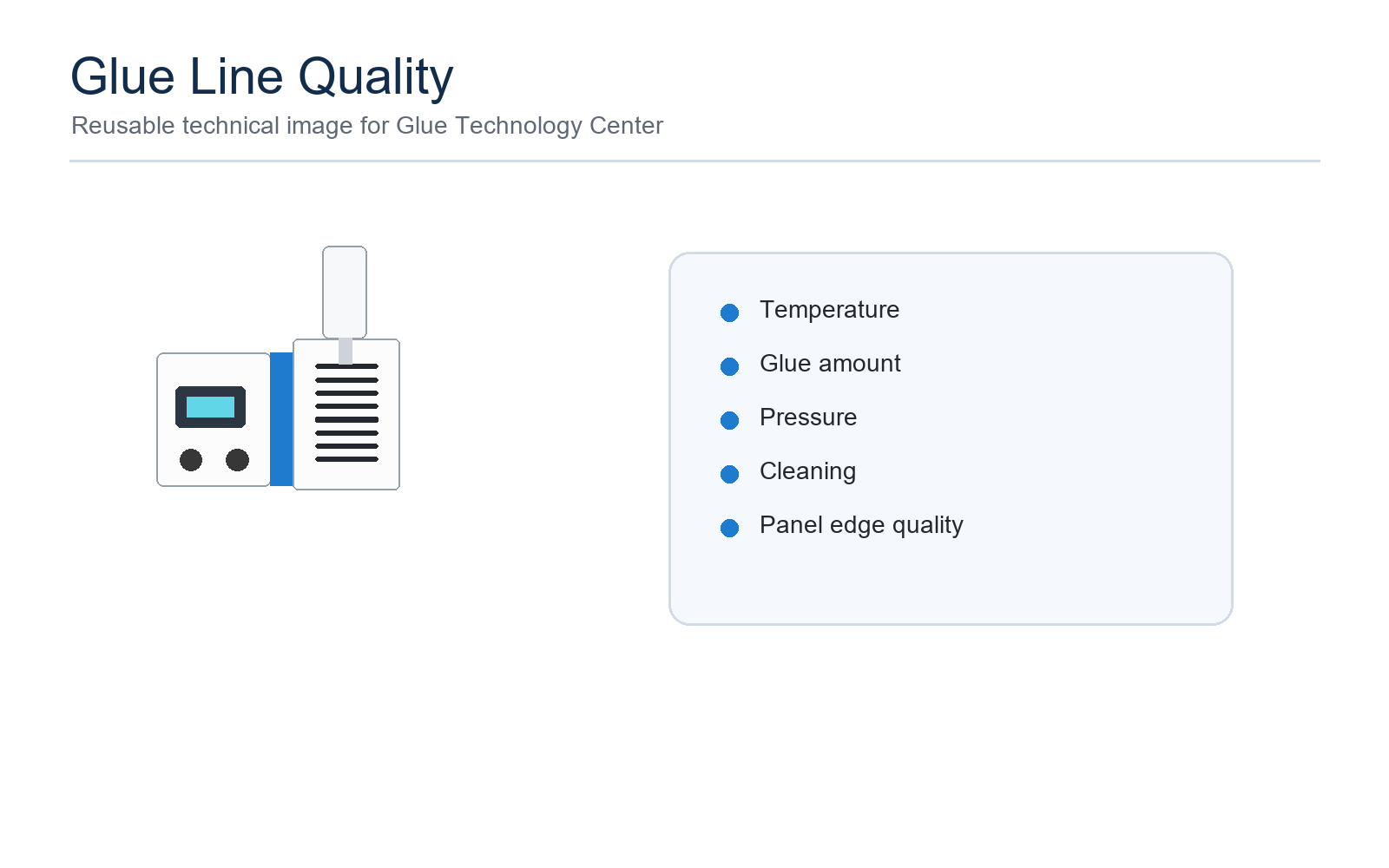
- As shown in Image 04, operators should check waiting time when defects appear after pauses.
- As shown in Image 05, maintenance routines are especially important when PUR is used.
FAQ
Does repeated heating affect EVA?
Yes. EVA can darken, thicken, smoke, or produce an unstable glue line after long heating.
Why is repeated heating risky for PUR?
PUR reacts with moisture, so poor heating and shutdown control can cause curing or blockage.
How can operators reduce repeated heating?
Start heating closer to production time and heat only the glue volume needed for the batch.
What symptom suggests overheated glue?
A changing glue line, smoke, darker glue, or more contamination after pauses can indicate overheating.
Internal Links
Related Articles
- How to Reduce Glue Waste in Edge Banding Production
- What Is PUR Edge Banding Adhesive?
- How Glue Temperature Affects Edge Banding Quality
Why One Good Sample Is Not Enough: First–Middle–Last Inspection for Decorative Profiles
Why Edge Banding First Changes Decorative Moulding Production
HK640 Crawler Edge Banding Machine
HK690 Narrow-Edge Banding Machine Overview