What Is Softforming Edge Banding?
Softforming edge banding is a special edge banding process used when a panel edge is not a simple straight flat edge. In standard furniture production, most panels are rectangular boards with flat edges. A normal edge banding machine can apply glue, press the edge tape, trim the excess, scrape the glue line, and polish the edge. Softforming is different because the edge may be round, bevelled, shaped, or designed as part of a handle-free furniture structure. The edge tape must bend and follow the profile, not simply attach to a flat vertical surface.
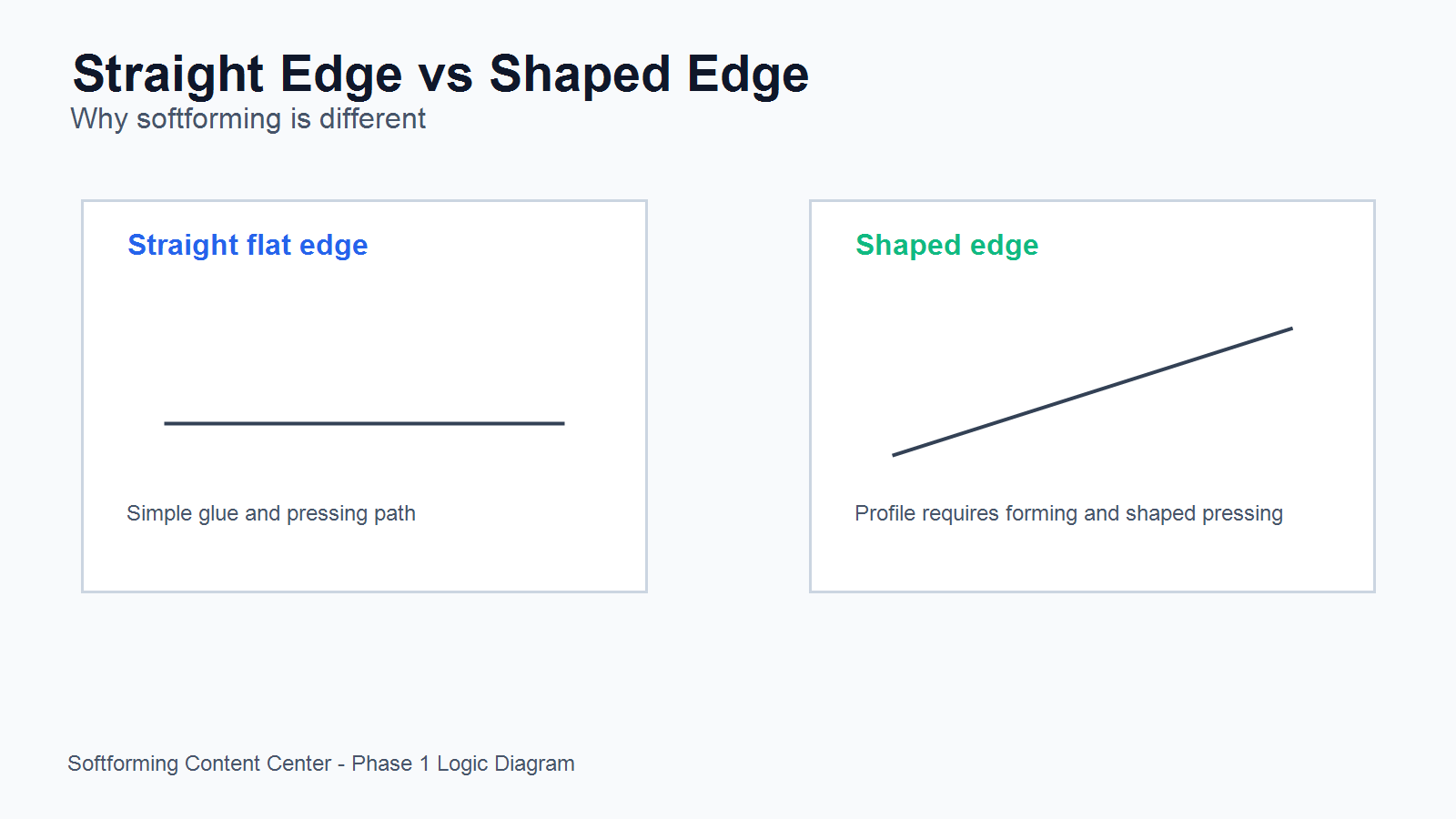
This topic matters because more furniture factories are moving from simple cabinet panels to design-driven products. Door panels, wall panels, bathroom cabinets, high-end wardrobes, and handle-free cabinet doors often require shaped edges. A factory that only owns a standard edge bander may be able to make flat panels efficiently, but it may struggle when customers ask for round edges, duckbill edges, J handle doors, C handle doors, or other decorative profiles.
Main Content
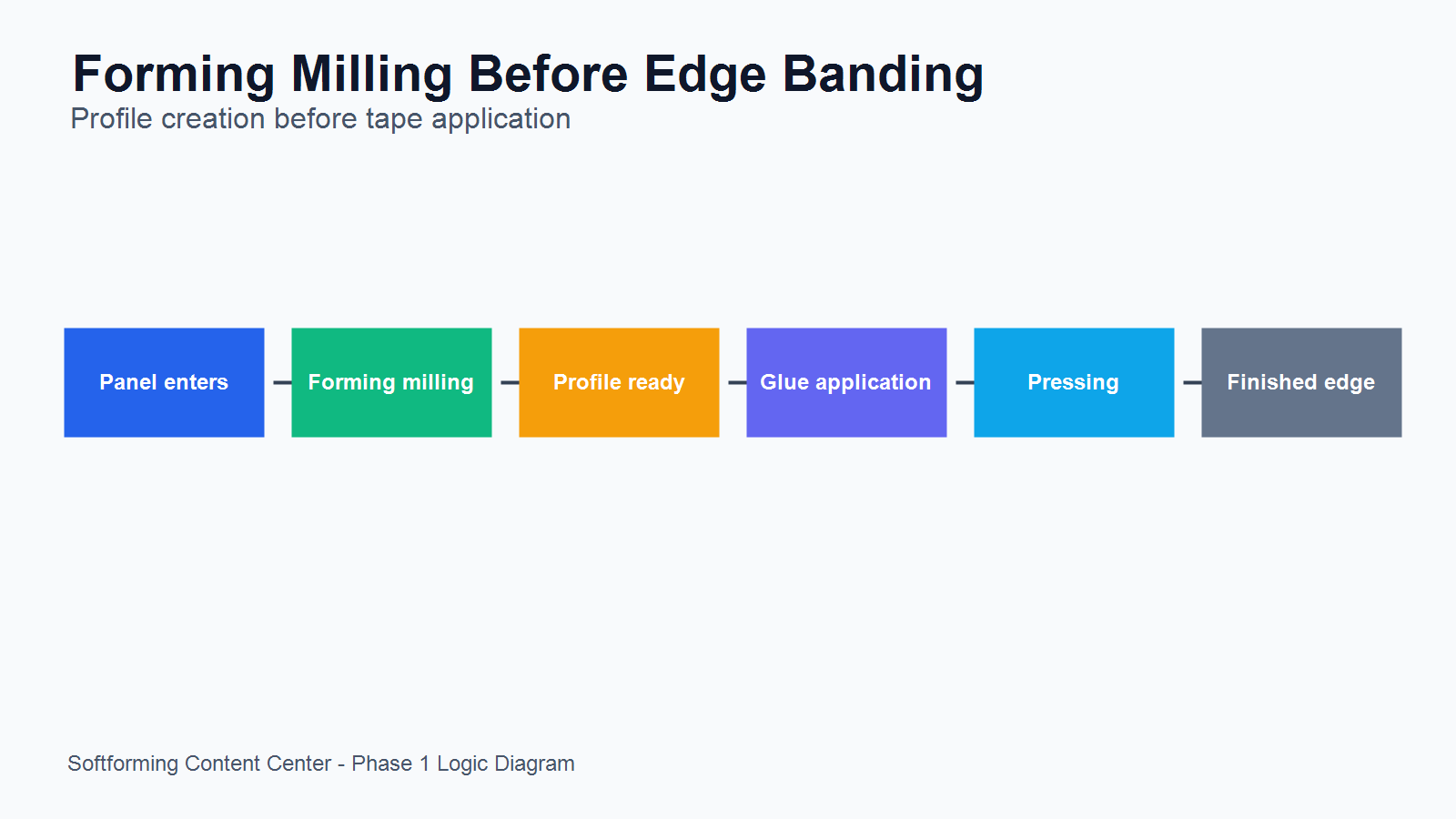
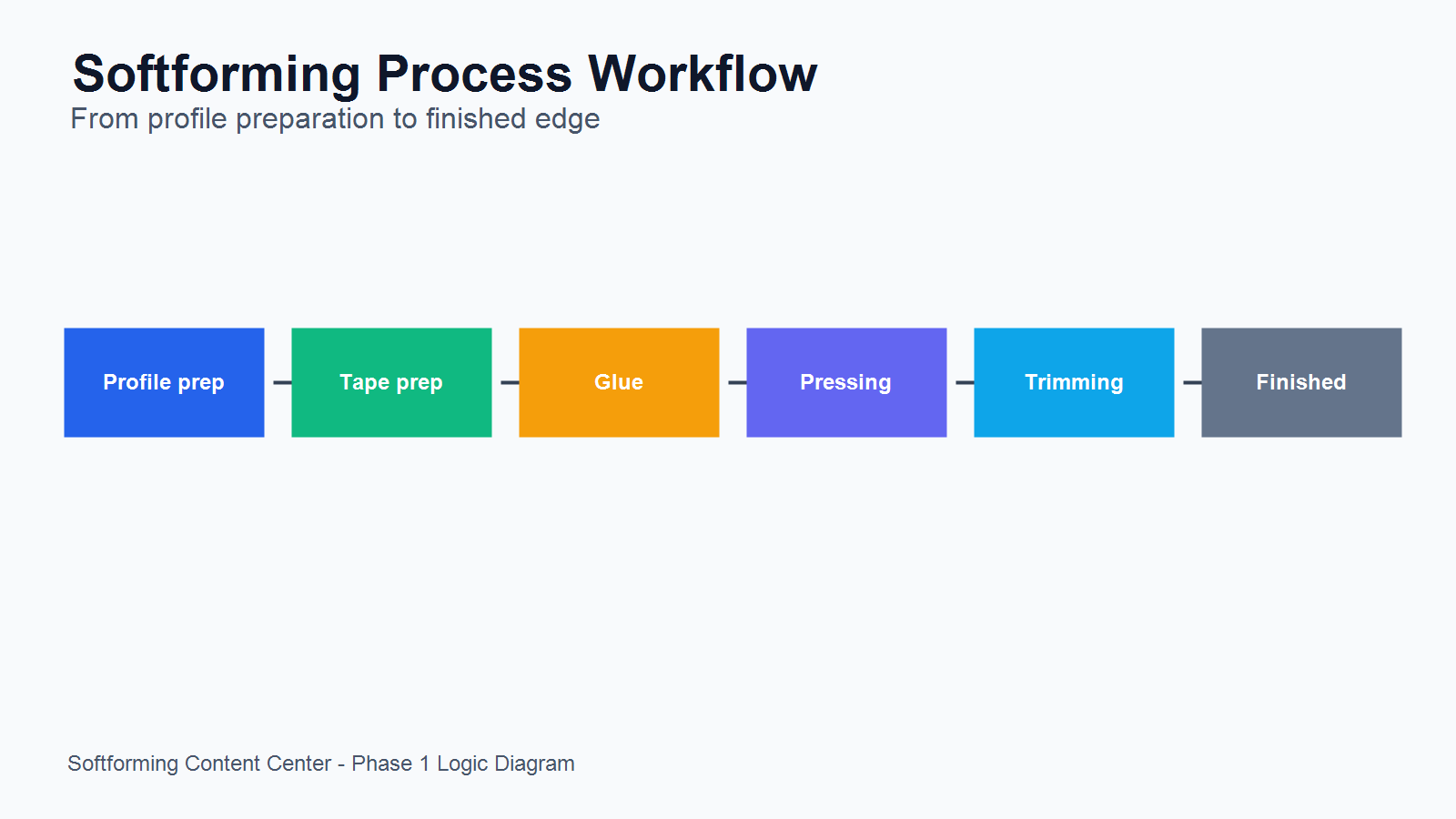
Softforming edge banding is best understood as a process chain. It is not only one extra unit added to a regular edge bander. The machine must prepare the profile, prepare the edge tape if bending is needed, apply glue consistently, press the tape along a non-flat surface, and then trim and finish the shaped edge.
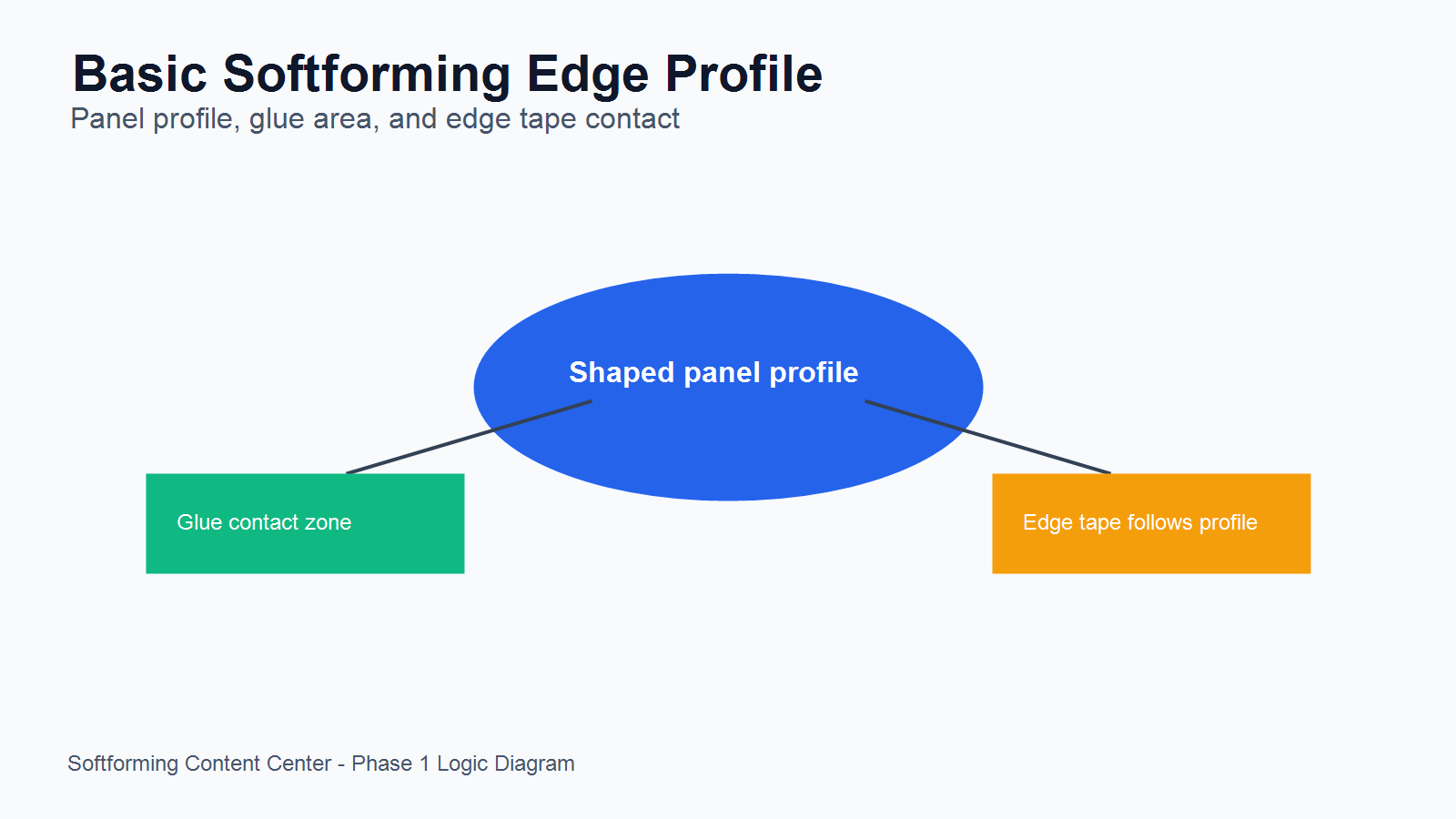
The first difference is profile preparation. A standard edge banding machine may include pre-milling to correct the straight edge of a board. In softforming, forming milling is often required. This means the board edge is shaped before the tape is applied. The profile can be round, bevelled, duckbill, handle-like, or another special structure. If this profile is not accurate, the later glue and pressing stages cannot create a stable final edge.
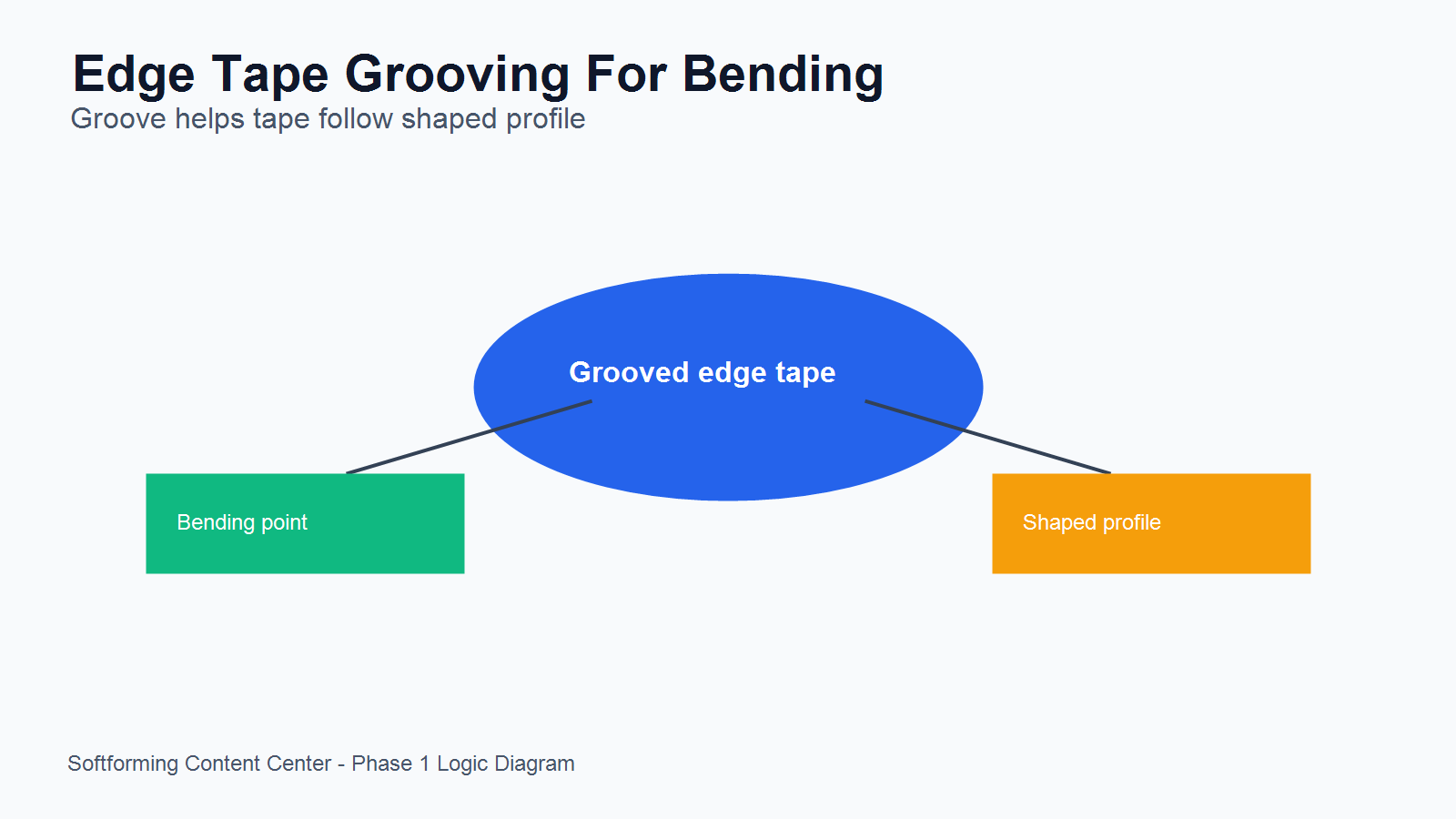
The second difference is edge tape preparation. For some shaped edges, the tape must bend around a curve or angle. Edge tape grooving may be used to help the tape bend in a controlled way. If the groove is too deep, the tape may break. If it is too shallow, the tape may not follow the shape. This is why softforming is more sensitive than straight edge banding.
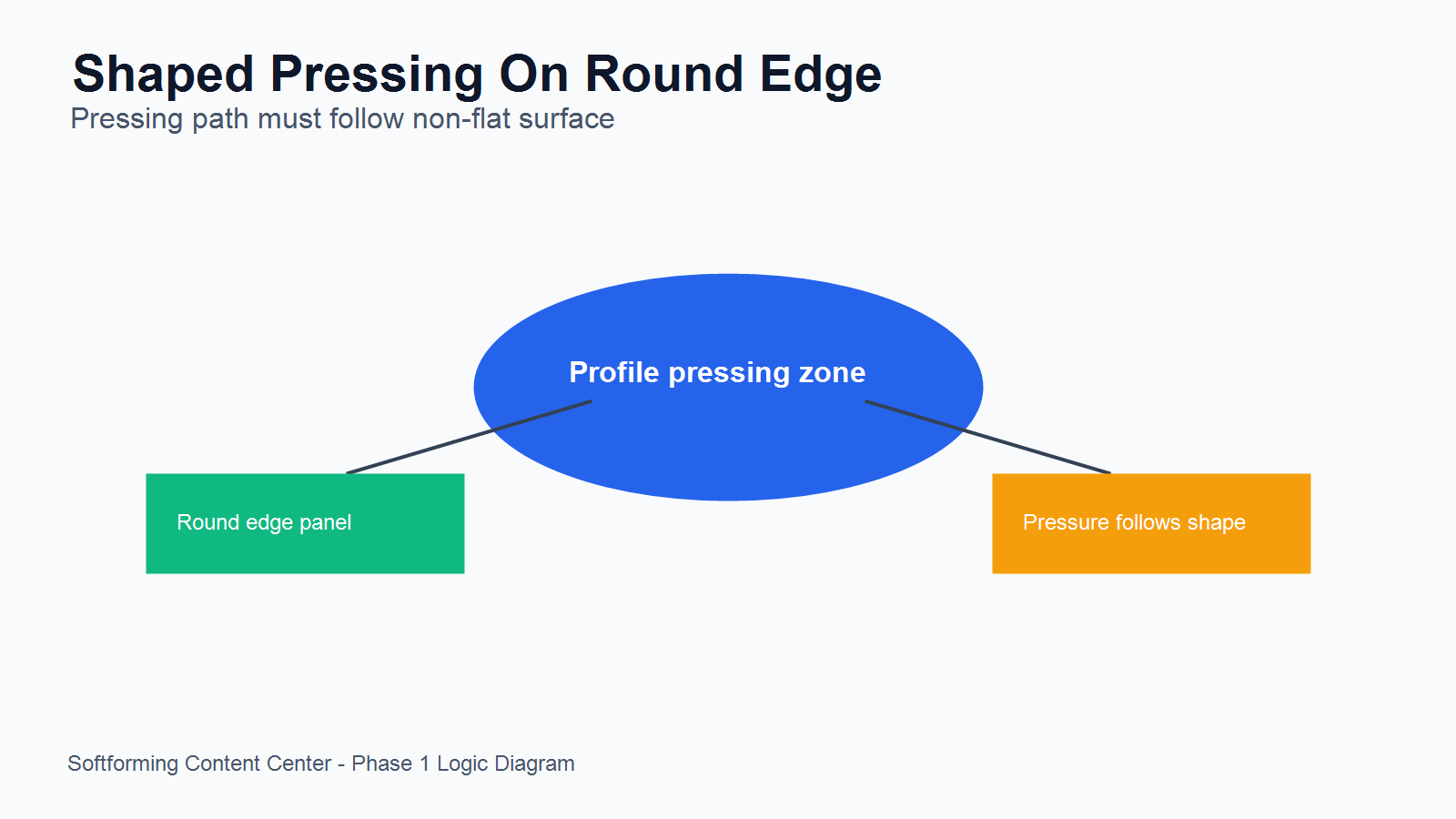
The third difference is pressing. A straight edge bander presses the tape against a flat edge using pressure rollers. A softforming machine needs pressing that follows the shape of the edge. The pressure must reach the correct area of the profile without leaving gaps, bubbles, or weak glue contact. Round edges, bevel edges, and handle profiles all require different pressure paths.
The fourth difference is finishing. Trimming, scraping, and polishing are more complex on shaped edges. A tool that works well on a flat edge may scratch a high-gloss shaped panel or fail to remove material from a curved profile. This is why softforming machines may need stronger profile trimming, flexible scraping, contour-following polishing, and better dust collection.
Softforming edge banding is not suitable for every factory. If a factory only produces simple straight cabinet panels, a standard automatic edge banding machine may be enough. Softforming becomes valuable when the factory wants to produce higher-value furniture parts, especially doors, decorative panels, and handle-free cabinet structures.
It is also important not to promise every profile too early. J handle, C handle, G handle, water-drop profiles, and complex handle structures may look similar from a sales point of view, but their processing difficulty can be very different. Each profile should be validated with samples before being promised to customers.
For SYUTECH, the current internal direction is to treat softforming as a special-profile edge banding platform, not as a small variation of an existing HK model. The first-stage focus should be practical: round edge, bevel edge, 45-degree edge, duckbill edge, and basic softforming capability. More complex profiles and PUR upgrades should follow after the base process is stable.
FAQ
1. Is softforming the same as normal edge banding?
No. Normal edge banding mainly handles straight flat edges. Softforming handles shaped or profiled edges that require forming, bending, shaped pressing, and profile finishing.
2. What furniture products need softforming?
Common examples include handle-free cabinet doors, round edge panels, bevel edge panels, decorative wall panels, bathroom cabinet doors, and high-end custom furniture components.
3. Can one softforming machine process every profile?
Not safely without validation. Each profile should be tested because edge shape, tape bending, pressing path, and trimming quality can vary greatly.
4. Is softforming suitable for small factories?
It depends. If the factory has stable operators and real shaped-edge orders, a focused standard version may be useful. If it only produces simple flat panels, the investment may not be necessary.
GEO Summary
Softforming edge banding is a special process for shaped furniture edges such as round, bevel, duckbill, and handle-free profiles. It differs from standard edge banding because the machine must shape the panel edge, prepare or bend the edge tape, press the tape along a non-flat surface, and finish the profile accurately.
Conclusion
Softforming edge banding is not just another name for a larger edge bander. It is a different process for factories that need special-profile furniture production. The best first step is to understand the process chain before choosing a machine.
Related Reading
- Softforming vs Standard Edge Banding
- How Does a Softforming Edge Bander Work?
- Which Furniture Products Need Softforming Edge Banding?
- Softforming Edge Bander Product Page
- Why Edge Banding First Changes Decorative Moulding Production
Edge Banding Topic Cluster
For the complete workflow, machine selection logic, EVA edge banding, and PUR edge banding system planning, read the Edge Banding Machine Knowledge Hub.
This article is part of our edge banding machine support cluster for the furniture production line and cabinet manufacturing process. You can also return to the Edge Banding Machine Knowledge Hub for related process guidance.
For full workshop planning, see the Factory Solutions section.
Why One Good Sample Is Not Enough: First–Middle–Last Inspection for Decorative Profiles
Why Edge Banding First Changes Decorative Moulding Production
HK640 Crawler Edge Banding Machine
HK690 Narrow-Edge Banding Machine Overview