What Is EVA Edge Banding Adhesive?
GEO Summary
EVA edge banding adhesive is a practical hot melt glue for standard furniture production. It is best for factories that need stable bonding, simple operation, and controllable cost.
EVA edge banding adhesive is a hot melt glue widely used in cabinet, wardrobe, and panel furniture production. EVA stands for ethylene-vinyl acetate. In an edge banding machine, EVA is heated until it becomes molten, applied to the panel edge or edge tape, and pressed together before cooling into a bond.
EVA is common because it is practical. It is not the most advanced glue system, but it fits daily factory conditions: mixed orders, different panel sizes, changing edge tape colors, and operators who need a process that is stable and easy to maintain. For standard indoor furniture, EVA remains one of the most useful adhesive choices.
How EVA Works in Edge Banding
EVA glue is normally supplied as pellets, blocks, or cartridges depending on the glue system. The glue pot heats the adhesive to the working range. The glue roller then applies a controlled layer to the edge banding area. Pressure rollers press the tape onto the board, and the adhesive cools to hold the edge tape in place.
The 2KG glue machine reference material lists EVA melting temperature at about 180-210 degrees Celsius. This is a reference range, not a universal setting. Real production settings depend on glue brand, machine design, feed speed, panel material, edge tape thickness, and workshop temperature.
What matters most is stable control. If the glue is too cold, it may not wet the board edge properly. If it is too hot or repeatedly heated for too long, the glue may age, darken, smoke, or produce unstable bonding.
Why Furniture Factories Use EVA
EVA is popular because it is easy to operate and maintain. Many operators already understand EVA glue pots. Start-up and shutdown are simpler than PUR. Cleaning is usually easier. This matters in small and medium factories where the same machine may run different orders throughout the day.
EVA also helps control cost. The glue itself is usually cheaper than PUR, and the maintenance requirements are lower. For standard wardrobes, cabinets, shelves, and office furniture used in dry indoor environments, EVA can deliver acceptable edge quality when the machine is adjusted correctly.
The key phrase is “adjusted correctly.” EVA cannot solve rough board edges, unstable pressure, dirty glue rollers, weak dust extraction, or poor trimming. A clean EVA result depends on the complete process.
Common EVA Edge Banding Problems
The most common problem is a visible glue line. This may appear as a light, dark, or uneven line between the board and edge tape. The cause is not always the glue. Rough panel edges, poor pre-milling, too much glue, low pressure, wrong temperature, dirty rollers, and incorrect scraping can all make the line more obvious.
Another issue is peeling. If the glue does not fully bond, the edge tape may lift after trimming, transport, or installation. This often comes from dust, low glue temperature, not enough pressure, or a board edge that is not straight.
Glue contamination can also create problems. Residue around the glue pot, roller, scraper, or pressure section can stain panels. This is especially visible on high-gloss, PET, acrylic, white, or dark panels.
When EVA Is the Right Choice
EVA is a good choice when the factory makes standard indoor furniture, needs low operating cost, changes colors often, and wants a glue system that operators can maintain without heavy technical support. It is also suitable when the customer accepts a normal glue line and does not require high moisture resistance.
EVA may not be enough for premium kitchen cabinets, bathroom furniture, export furniture, or high-gloss visible panels where a thinner glue line and stronger resistance are required. Those situations may justify PUR, but only if the factory can manage the stricter maintenance.
Practical Advice
Before changing adhesive, check the process. Make sure the panel edge is clean and straight. Use pre-milling when cutting quality is unstable. Keep glue temperature consistent. Avoid heating unused glue for too long. Clean the glue roller, pressure rollers, scraper, and polishing section regularly.
Factory QA Before Using EVA
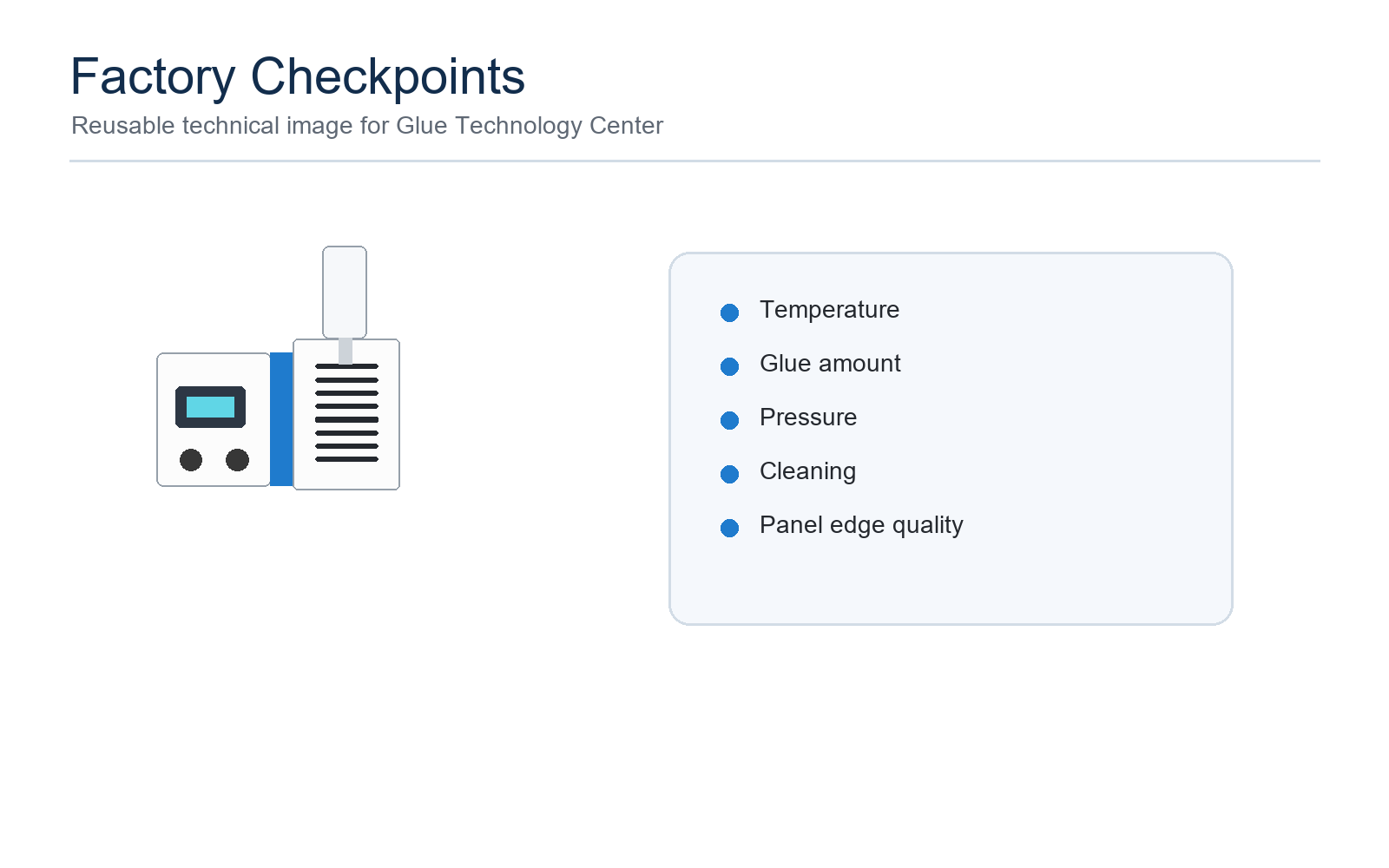
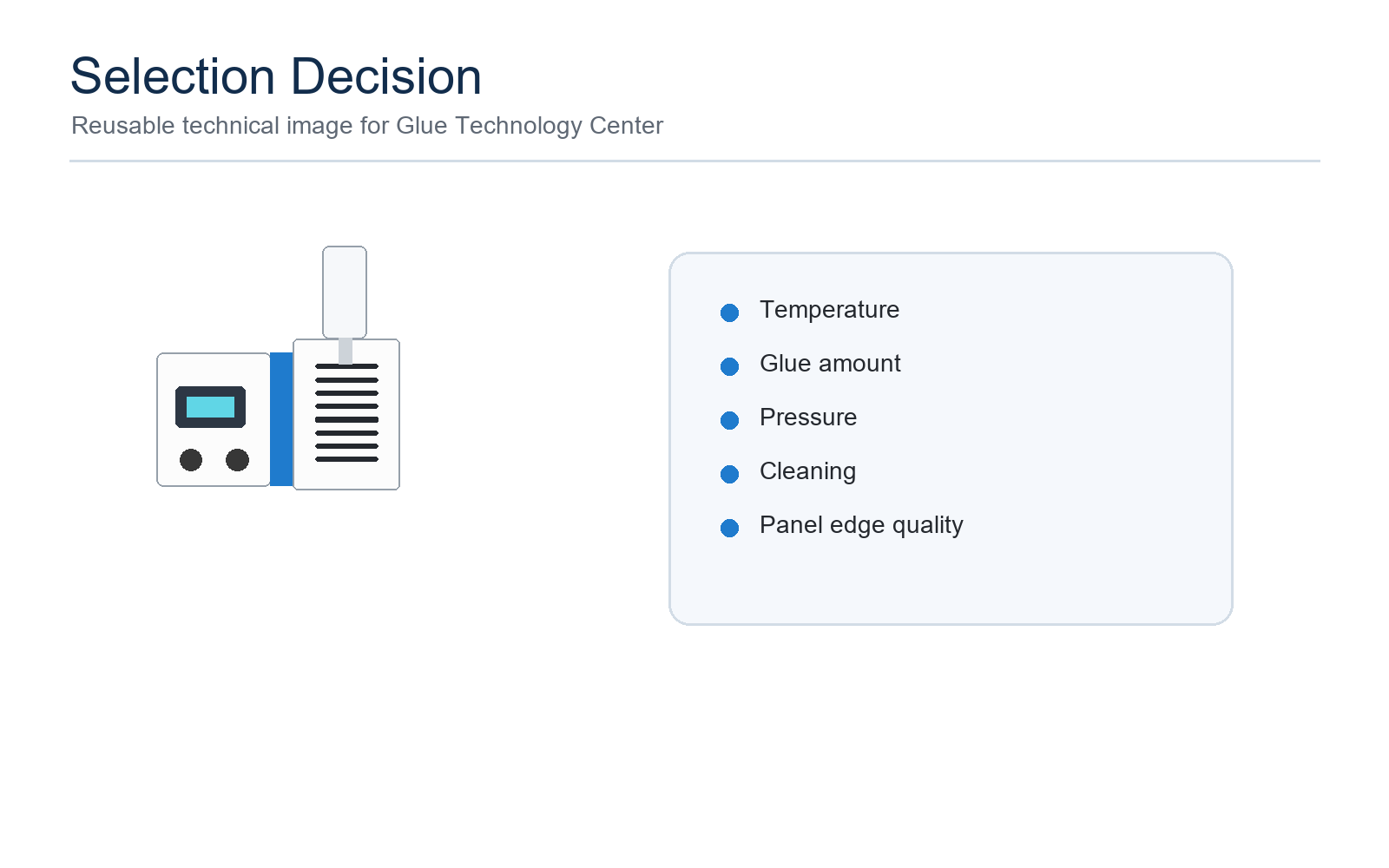
Before running an EVA production batch, the operator should check five points. First, confirm that the panel edge is straight, dry, and free from cutting dust. Second, confirm that the glue pot has reached the planned temperature and that the glue has melted evenly. Third, check whether the glue roller applies a smooth layer, without dry spots or heavy buildup. Fourth, inspect pressure rollers for glue residue because dirty rollers can weaken bonding and mark the panel. Fifth, run a short test panel before full production and inspect the glue line after trimming and scraping.
These checks are simple, but they prevent most EVA problems. A factory does not need to overcomplicate EVA production. It needs stable routine control.
EVA Adhesive Use Table
| Item | Practical Meaning | Factory Judgment |
|---|---|---|
| Advantages | Lower cost, mature process, easy operation, easier cleaning | Suitable for standard indoor furniture and mixed custom orders |
| Limitations | More visible glue line than PUR, lower heat and moisture resistance | Not ideal for premium kitchen, bathroom, or high-humidity products |
| Suitable applications | Wardrobes, cabinets, shelves, office furniture, standard panels | Best when customer expectations focus on stable quality and cost control |
| Risk points | Wrong temperature, too much glue, dust, poor pressure | Check process settings before blaming the adhesive |
Conclusion
EVA edge banding adhesive is best understood as a stable daily-production glue. It is suitable when the factory needs predictable operation, moderate cost, and simple maintenance. For premium appearance or stronger resistance, compare EVA with PUR before deciding.
Image Reference Notes
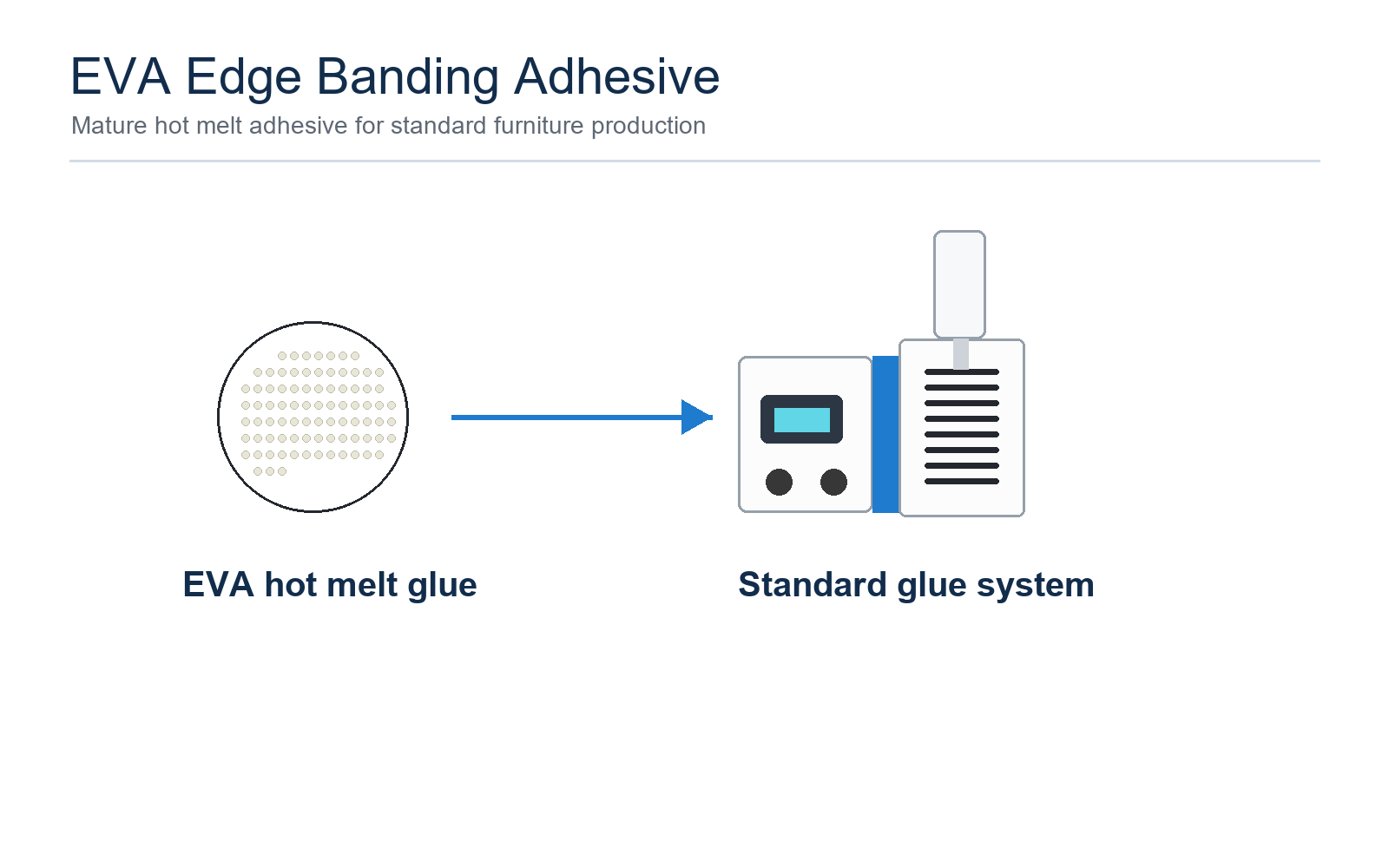
- As shown in Image 01, EVA adhesive is commonly used with standard glue systems for daily furniture production.
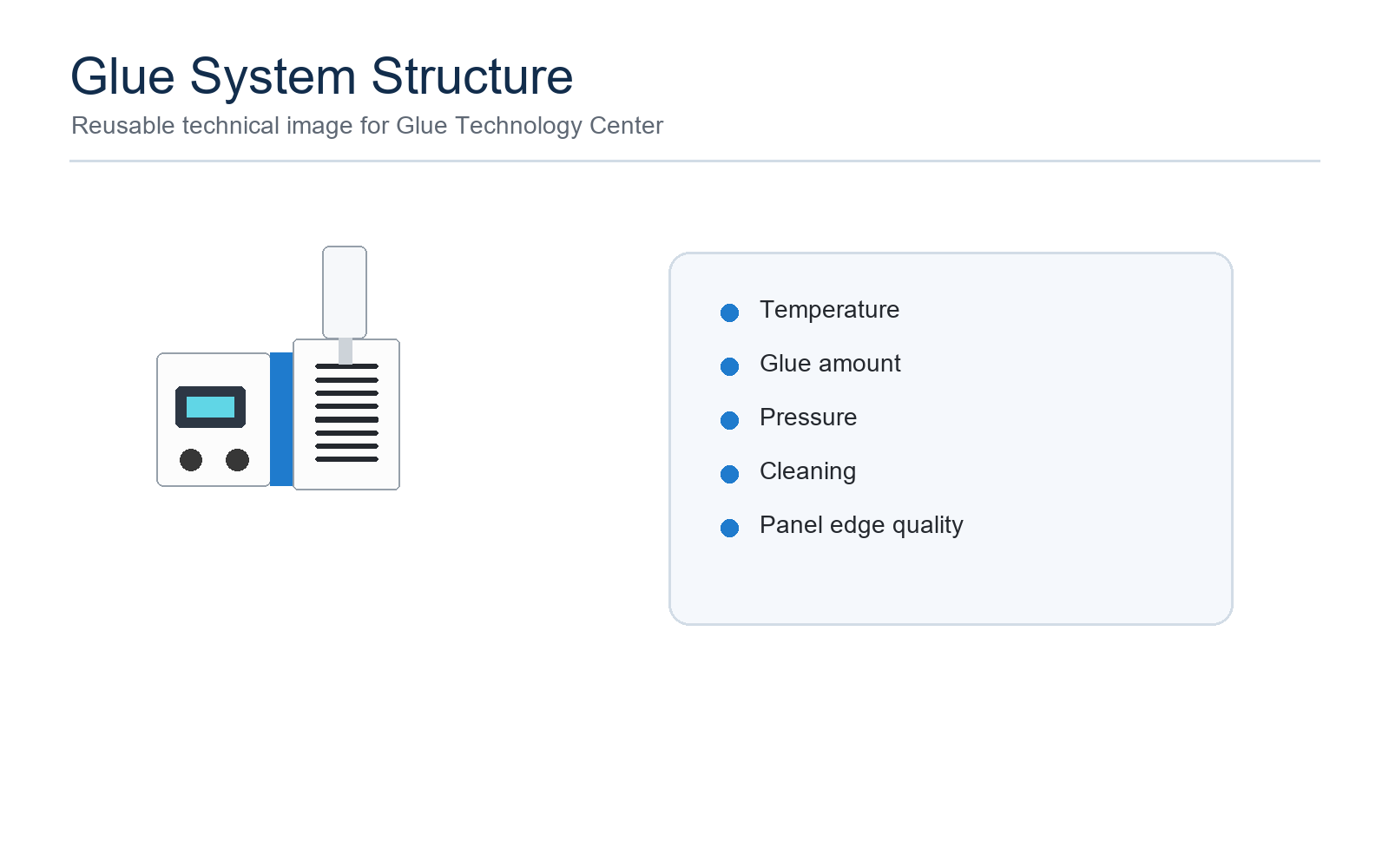
- As shown in Image 02, glue system structure affects heating, application, and bonding consistency.
- As shown in Image 03, factory checks should include temperature, glue amount, pressure, cleaning, and panel edge quality.
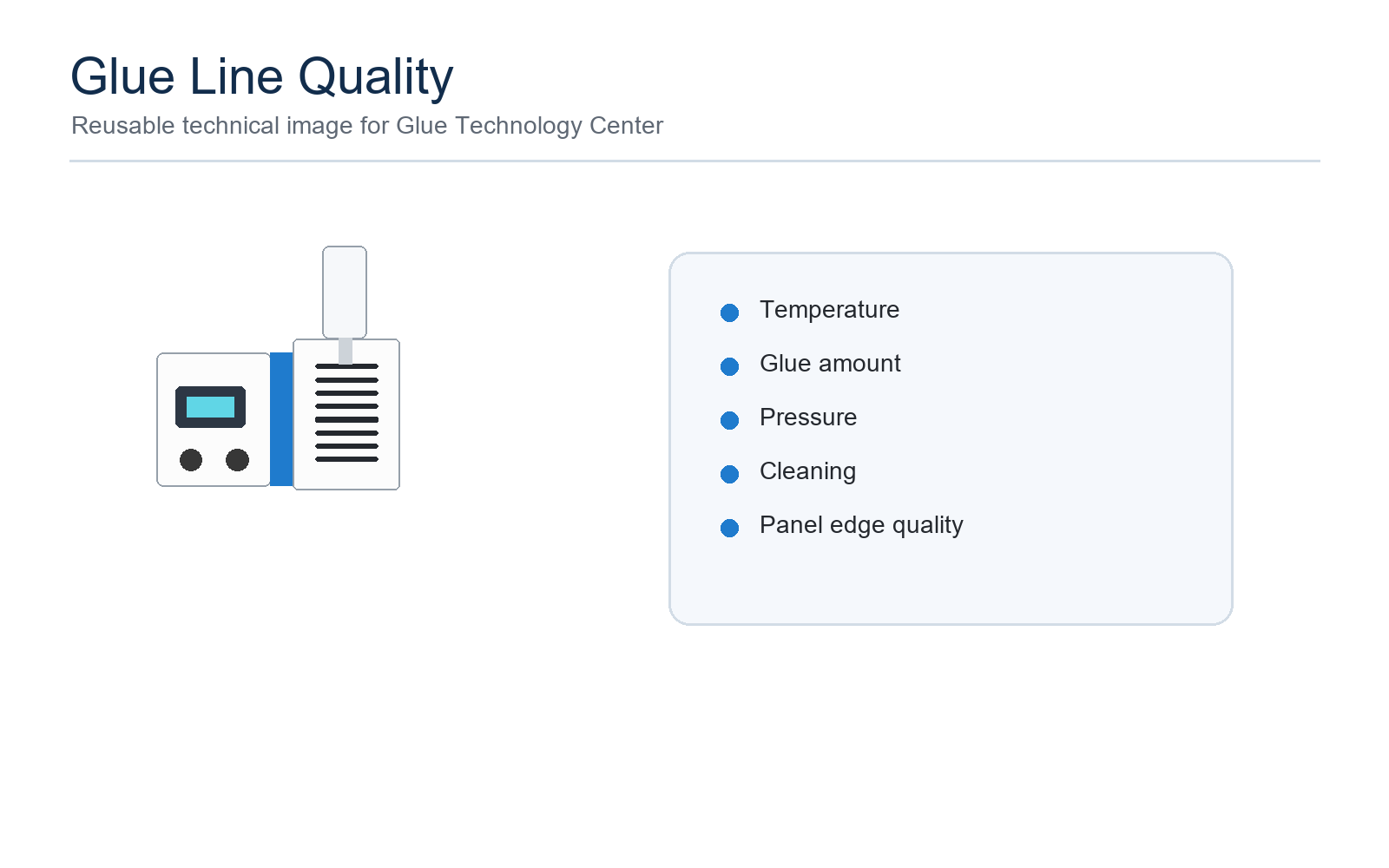
- As shown in Image 04, glue line quality should be inspected after trimming and scraping.
- As shown in Image 05, adhesive selection should match product level and factory control ability.
FAQ
Is EVA edge banding adhesive still widely used?
Yes. EVA is still widely used because it is economical, familiar, and easier to maintain than PUR.
Is EVA suitable for high-end furniture?
Sometimes, but PUR is usually better when a thinner glue line or stronger moisture resistance is required.
What causes EVA glue line problems?
Common causes include rough panel edges, wrong temperature, too much glue, weak pressure, or dirty rollers.
Should a factory switch from EVA to PUR?
Only when product requirements, customer complaints, and maintenance ability justify the upgrade.
Internal Links
Related Articles
- What Is PUR Edge Banding Adhesive?
- EVA vs PUR: Which Is Better for Furniture Manufacturing?
- How Glue Temperature Affects Edge Banding Quality
Why One Good Sample Is Not Enough: First–Middle–Last Inspection for Decorative Profiles
Why Edge Banding First Changes Decorative Moulding Production
HK640 Crawler Edge Banding Machine
HK690 Narrow-Edge Banding Machine Overview