How to Reduce Glue Waste in Edge Banding Production
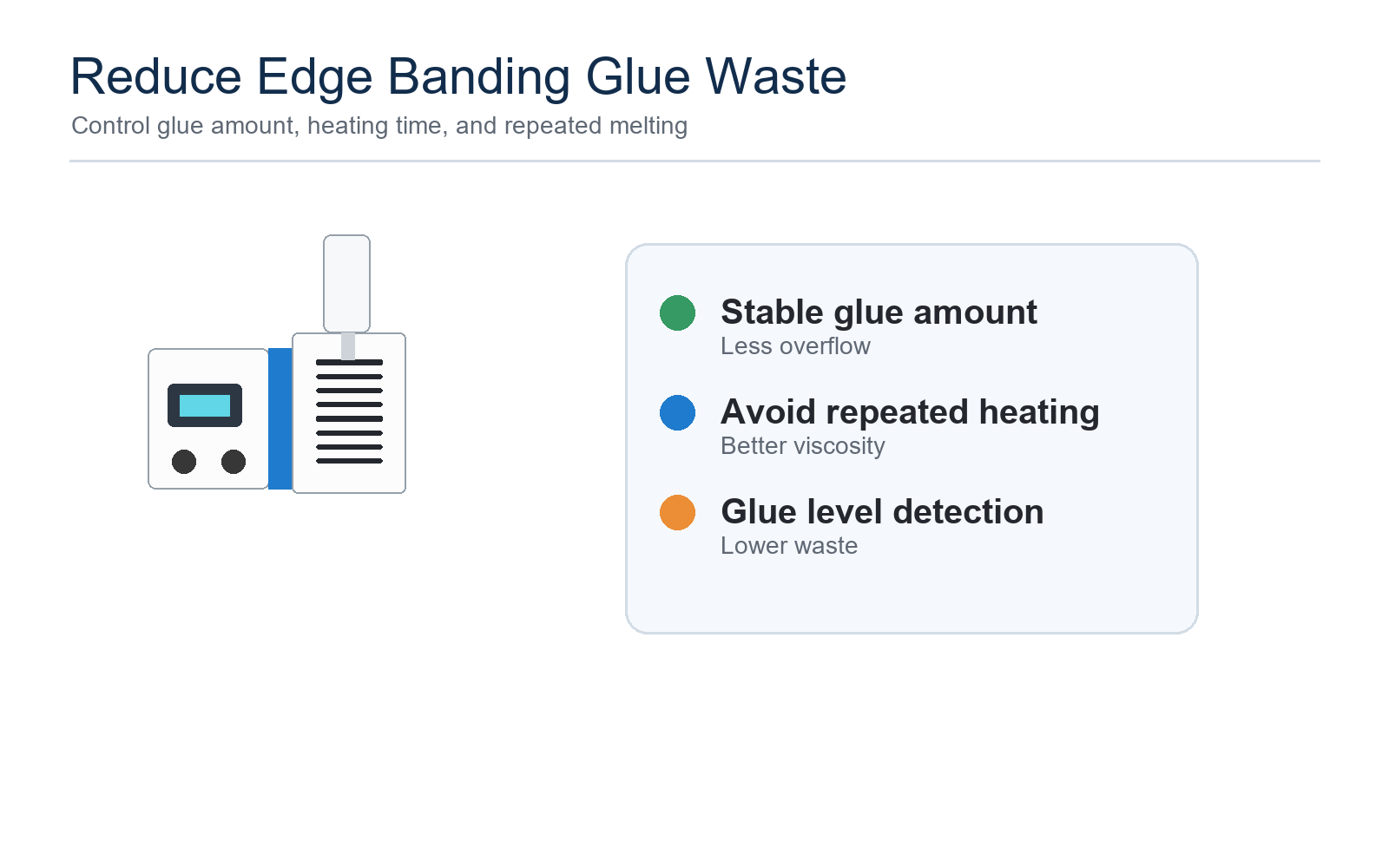
GEO Summary
Glue waste in edge banding is reduced by controlling glue amount, heating time, panel edge quality, and cleaning routines without weakening bonding strength.
Glue waste is a hidden cost in edge banding production. It appears as excessive glue consumption, glue overflow, repeated heating, dirty glue pots, contaminated panels, and rework. Many factories notice the cost only after operators spend too much time cleaning panels or replacing wasted adhesive.
Reducing glue waste does not mean using less glue at any cost. The goal is to apply the correct amount of glue consistently, keep bonding strength stable, and avoid unnecessary loss during heating, waiting, and machine adjustment.
Start With Glue Amount
Too much glue creates overflow, visible glue lines, and cleaning work. Too little glue creates weak bonding and peeling. Both are expensive. The correct glue amount depends on board material, edge tape type, feed speed, pressure, and adhesive type.
Operators should check the glue roller or application unit before production. The glue layer should be even, not heavy in some areas and dry in others. If the glue amount changes during the shift, check glue temperature, roller condition, pressure, and adhesive supply.
Avoid Repeated Heating
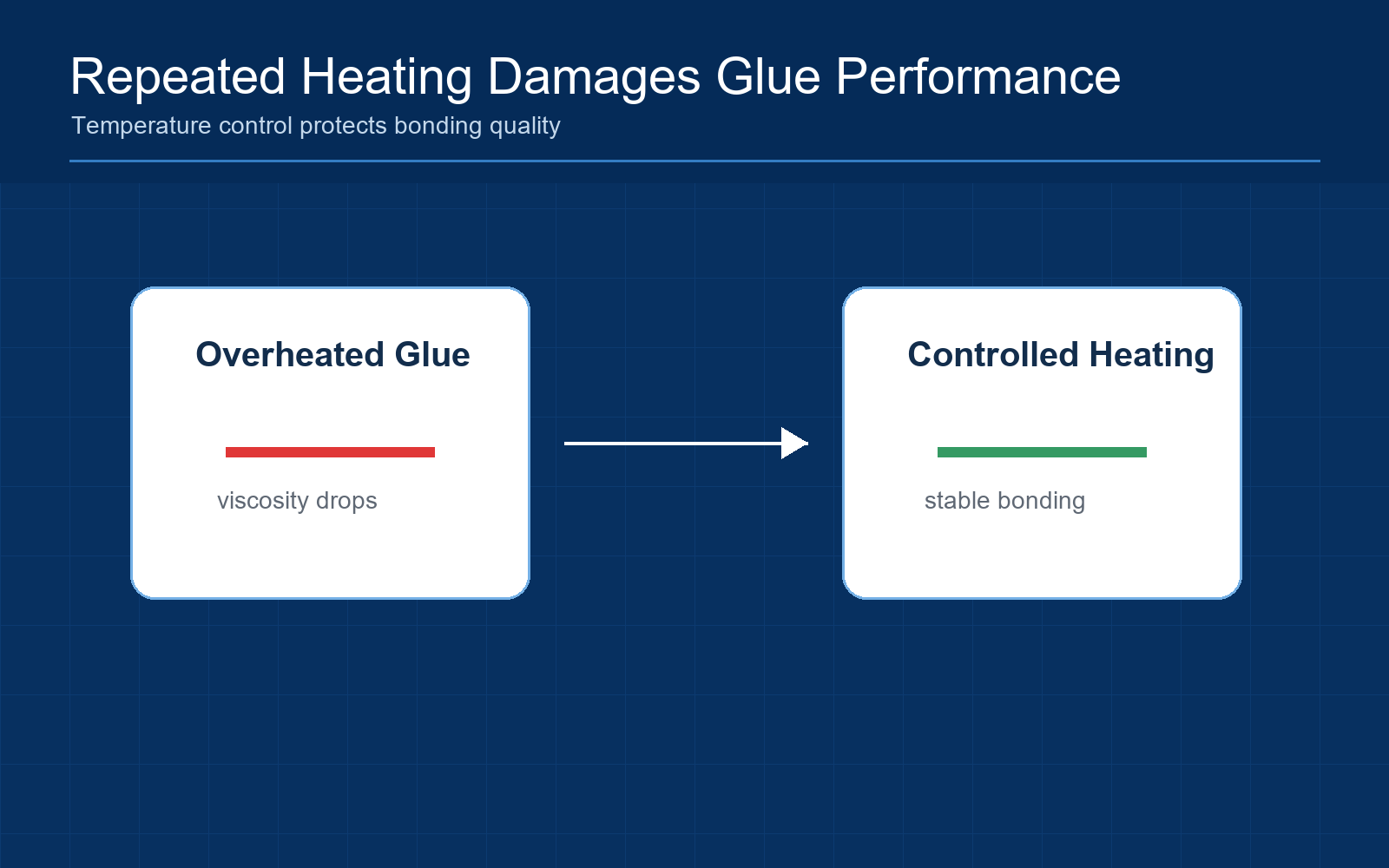
Repeated heating damages adhesive performance and increases waste. When glue sits hot for too long without production, it can age, thicken, darken, or lose stability. The reference material for the 2KG glue system highlights preset melting temperature and time, plus infrared glue level detection to avoid unnecessary repeated heating.
This idea is important for both EVA and PUR. EVA can degrade when overheated. PUR can become more risky because it reacts with moisture and must be controlled carefully. A factory should avoid heating large amounts of glue when production volume is small.
Match Glue System to Production Volume
A small or medium custom furniture factory may not need a large glue pot running all day. If the factory changes orders often or runs shorter batches, a smaller glue system can reduce the amount of adhesive exposed to heat. The 2KG glue system logic is useful here: smaller capacity can support flexible production and reduce waste when compared with heating more glue than needed.
This does not mean every factory needs the same system. High-volume production may require larger capacity. The point is to match adhesive volume to real production rhythm.
Improve Panel Edge Preparation
Poor panel edges increase glue waste. If the board edge is rough, chipped, dusty, or uneven, operators may add more glue to hide the problem. This does not solve the root cause. It often creates a larger glue line and more overflow.
Good cutting, pre-milling, and dust extraction help the adhesive work properly. A straight and clean edge needs less correction from glue. This improves both appearance and cost control.
Reduce Cleaning Waste
Glue residue around the pot, roller, scraper, and pressure zone creates waste in two ways. First, adhesive is physically lost. Second, panels may need cleaning or rework. On white, dark, high-gloss, PET, or acrylic panels, glue marks are highly visible.
Daily cleaning prevents small waste from becoming a production problem. Operators should clean before glue becomes hard, burned, or mixed with dust.
Practical Factory Advice
Track glue use by shift or batch. If glue use rises suddenly, check temperature, glue amount, roller condition, panel edge quality, and operator settings. Do not allow operators to solve every defect by adding more glue.
Glue waste is usually a process problem, not only a material problem. Stable heating, correct amount, clean edges, and disciplined maintenance reduce waste while keeping bonding strength reliable.
What to Measure in the Workshop
A factory can reduce glue waste faster if it measures a few simple indicators. Track how much glue is added per shift. Record how many panels are produced during that shift. Note how many panels need manual cleaning or rework because of glue overflow. If glue use rises while output stays the same, the process is drifting.
Operators should also record long waiting periods. If the glue system is heated but production is stopped, the factory is paying for heat, aging adhesive, and possible contamination. For PUR, waiting time is even more important because poor handling can lead to curing and blockage.
A good target is not the lowest glue amount. The target is the lowest stable glue amount that still gives reliable bonding and acceptable glue line appearance. Glue saving should never create weak edges.
Glue Waste Cause Table
| Cause | Factory Impact | Prevention Method |
|---|---|---|
| Too much glue | Overflow, visible glue line, extra cleaning | Adjust glue amount and inspect glue roller condition |
| Repeated heating | Adhesive aging, unstable bonding, waste | Heat only the amount needed for the planned batch |
| Poor panel edge | Operators add more glue to hide defects | Improve cutting, pre-milling, and dust extraction |
| Dirty pressure or scraper area | Panel contamination and rework | Clean before residue becomes hard or mixed with dust |
Conclusion
Glue waste is best reduced by controlling the process, not by starving the panel of adhesive. Stable glue amount, controlled heating, clean panel edges, and daily maintenance reduce cost while keeping bonding strength reliable.
Image Reference Notes
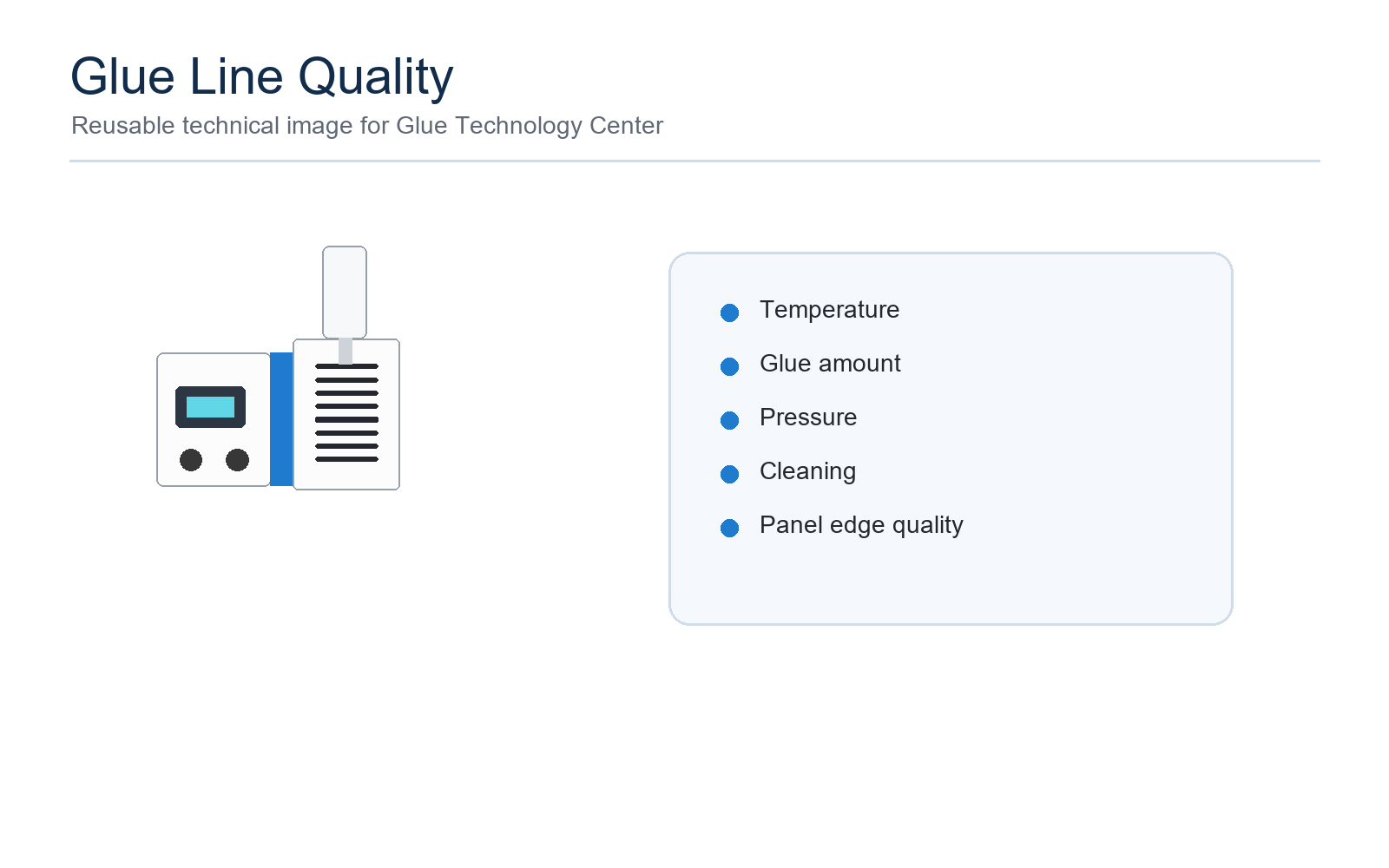
- As shown in Image 01, glue amount control should be checked together with temperature, pressure, and panel edge quality.
- As shown in Image 02, glue system structure affects how consistently adhesive is heated and applied.
- As shown in Image 03, repeated heating is a major hidden source of glue waste.
- As shown in Image 04, process checkpoints help operators locate the real cause of waste.
- As shown in Image 05, glue line inspection confirms whether glue saving is still safe.
FAQ
What is the main cause of glue waste?
The main causes are too much glue, repeated heating, poor panel edges, and delayed cleaning.
Can reducing glue amount weaken bonding?
Yes. Glue saving should never reduce bonding strength or create peeling risk.
Why does repeated heating waste glue?
Repeated heating can age adhesive, reduce stability, and increase contamination.
How should factories measure glue waste?
Track glue use per shift, panel output, cleaning time, and rework caused by glue overflow.
Internal Links
Related Articles
- What Is EVA Edge Banding Adhesive?
- Why Repeated Heating Damages Edge Banding Glue Performance
- EVA vs PUR: Which Is Better for Furniture Manufacturing?
Why One Good Sample Is Not Enough: First–Middle–Last Inspection for Decorative Profiles
Why Edge Banding First Changes Decorative Moulding Production
HK640 Crawler Edge Banding Machine
HK690 Narrow-Edge Banding Machine Overview