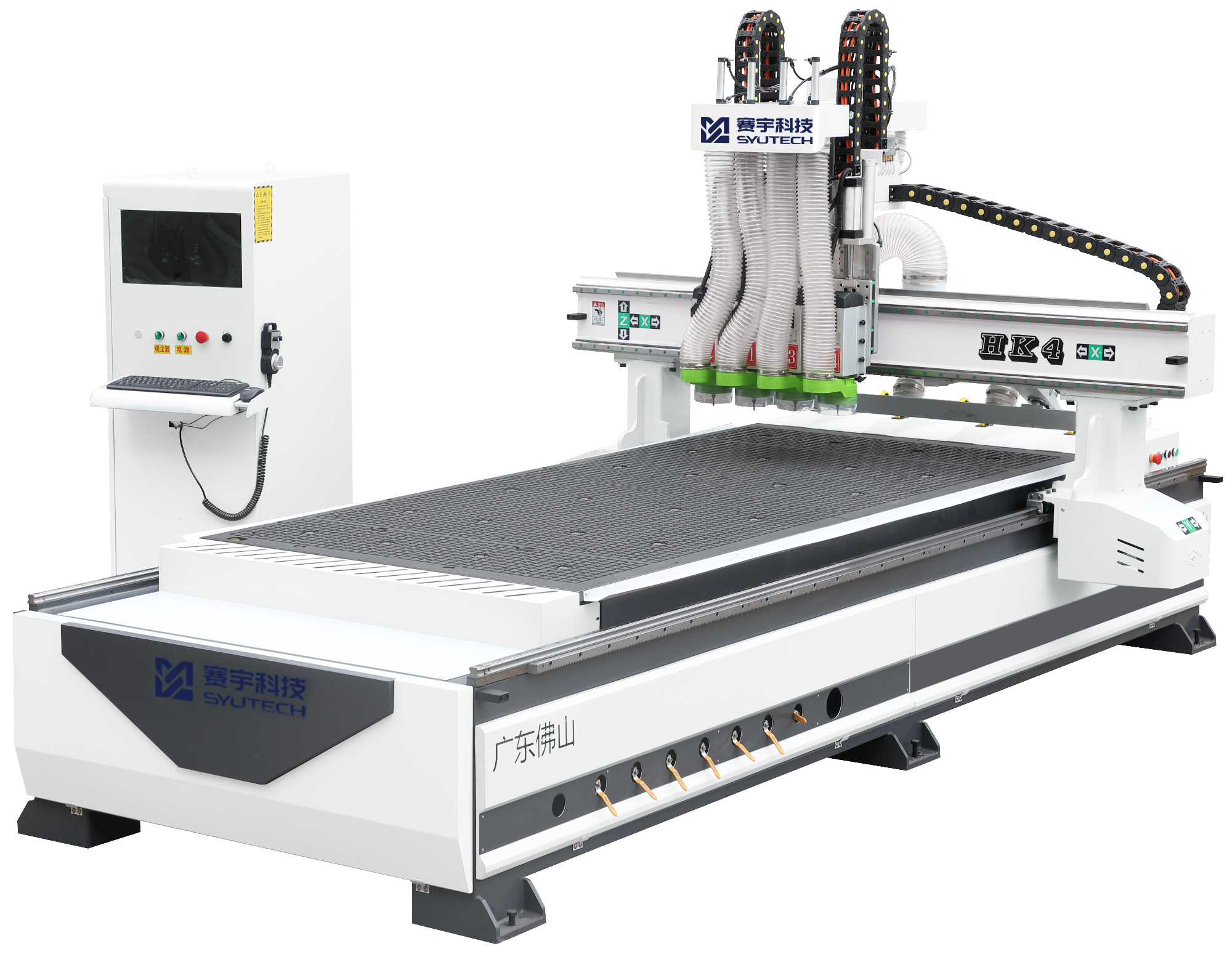
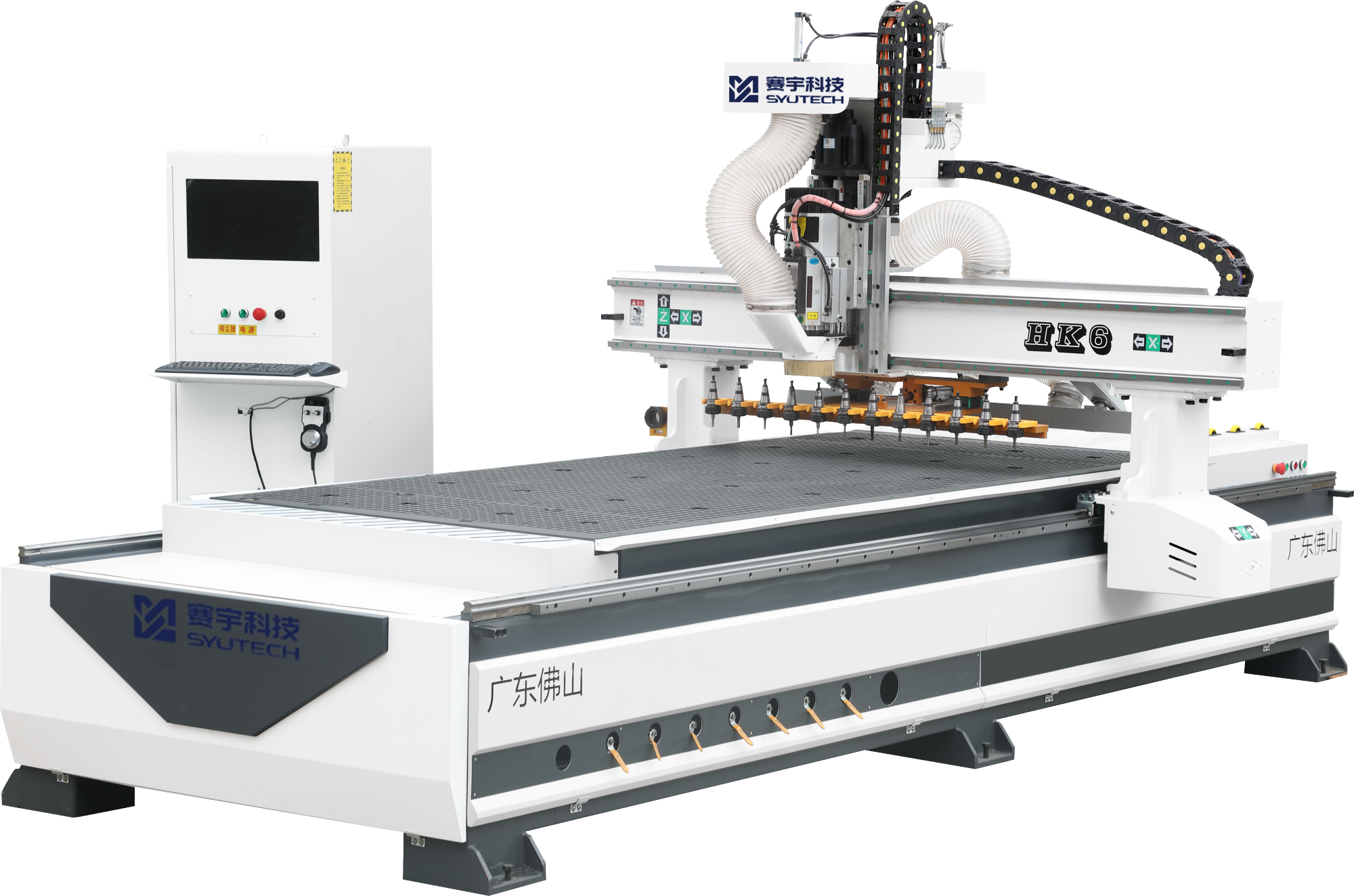
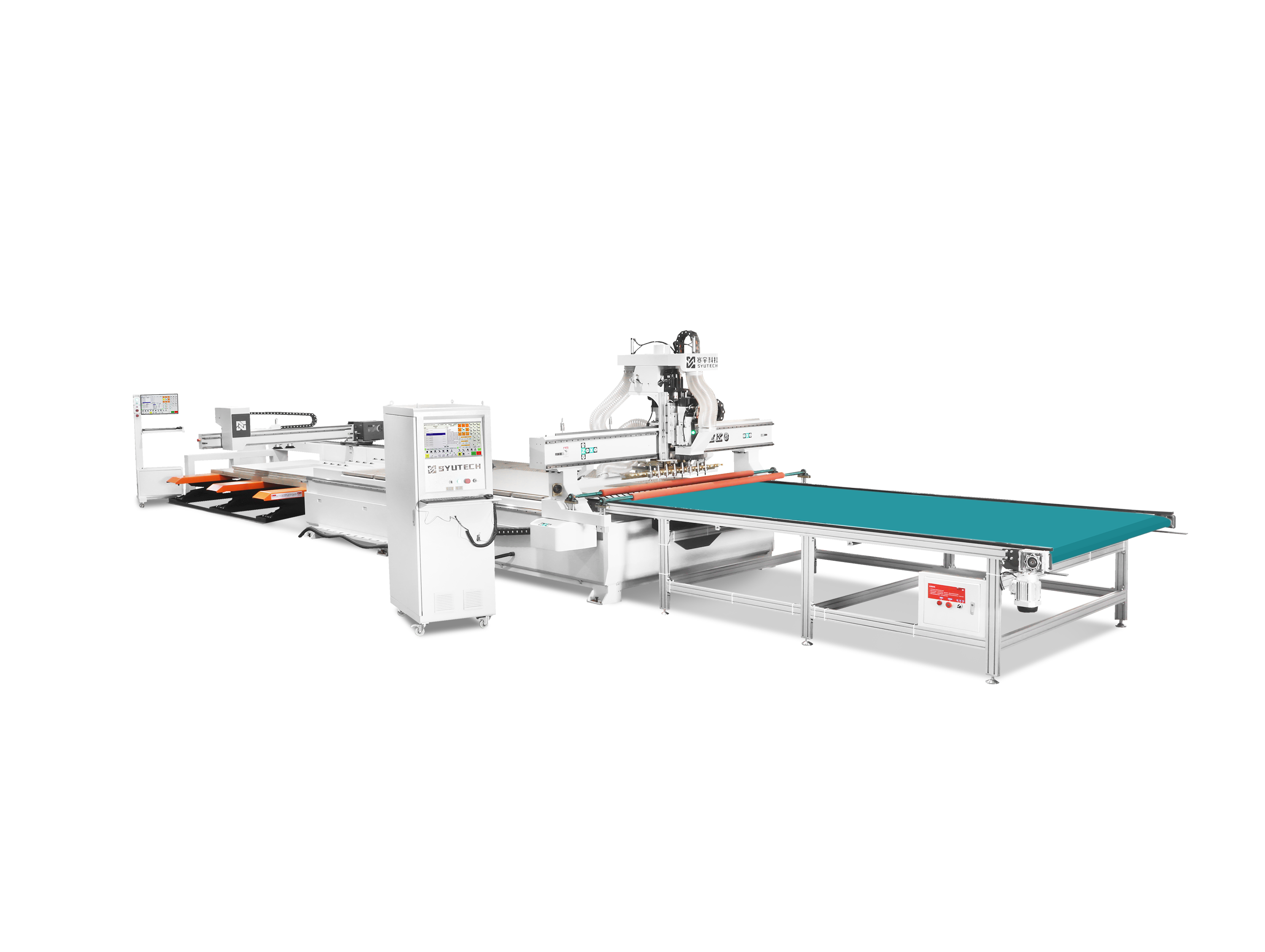
What is a CNC nesting machine used for?
It arranges panel parts on a sheet and performs programmed cutting, drilling or grooving with router tooling. The exact process depends on the machine configuration, tools, software and workpiece data.
 Wood Machinery Network
A CNC nesting machine uses software, vacuum workholding and router tooling to cut, drill and groove panel parts arranged on a sheet. Wood Machinery Network helps buyers compare machine roles, production inputs and acceptance evidence without treating a catalogue specification as proof of factory output.
Compare CNC routers, standalone nesting centers and automated cutting lines for panel-furniture production.
Browse machine pages, compare production roles, and enter the detail page for specifications, video, factory context, and contact options.
A useful CNC nesting recommendation starts with the work, not with a model name. Share your panel materials and sizes, required cutting, drilling, routing or grooving operations, expected shift output, and current nesting, labeling and data workflow.
Ask for a proposal tied to your inputs and verify the related model range, materials and processes, output and software assumptions, workshop and quality-control evidence, support scope, test pieces and acceptance records.
Use these questions to define the process before comparing model names or catalogue figures.
It arranges panel parts on a sheet and performs programmed cutting, drilling or grooving with router tooling. The exact process depends on the machine configuration, tools, software and workpiece data.
Compare the real panel mix, part sizes, required machining, vacuum strategy, tooling, software, labeling, loading, unloading and downstream handoff. Ask suppliers to state every assumption behind an output estimate.
A standalone machine may suit a simpler material flow. An automated line can reduce handling, but only when the labeling, loading, unloading, data and downstream processes are ready for integration.
Request tests using representative panels and programs, then record edge quality, dimensional results, cycle sequence, tool changes, labeling accuracy, handling and the agreed acceptance criteria.
No. Factory output also depends on the part mix, toolpaths, drilling, tool changes, loading, unloading, labeling, operator work and downstream capacity. Verify the proposed workflow with your own production inputs.
Send panel materials and sizes, example drawings, required operations, shift target, current bottleneck, software and labeling method, available space, electrical standard and the acceptance test you expect.
Ask WMN for machine configuration, factory solution advice, and production planning support.