A four-spindle mortising machine should be evaluated against the part it must produce—not only against a machine model name. The right discussion starts with the material, dimensions, joint geometry, tool access, clamping method and required process sequence.
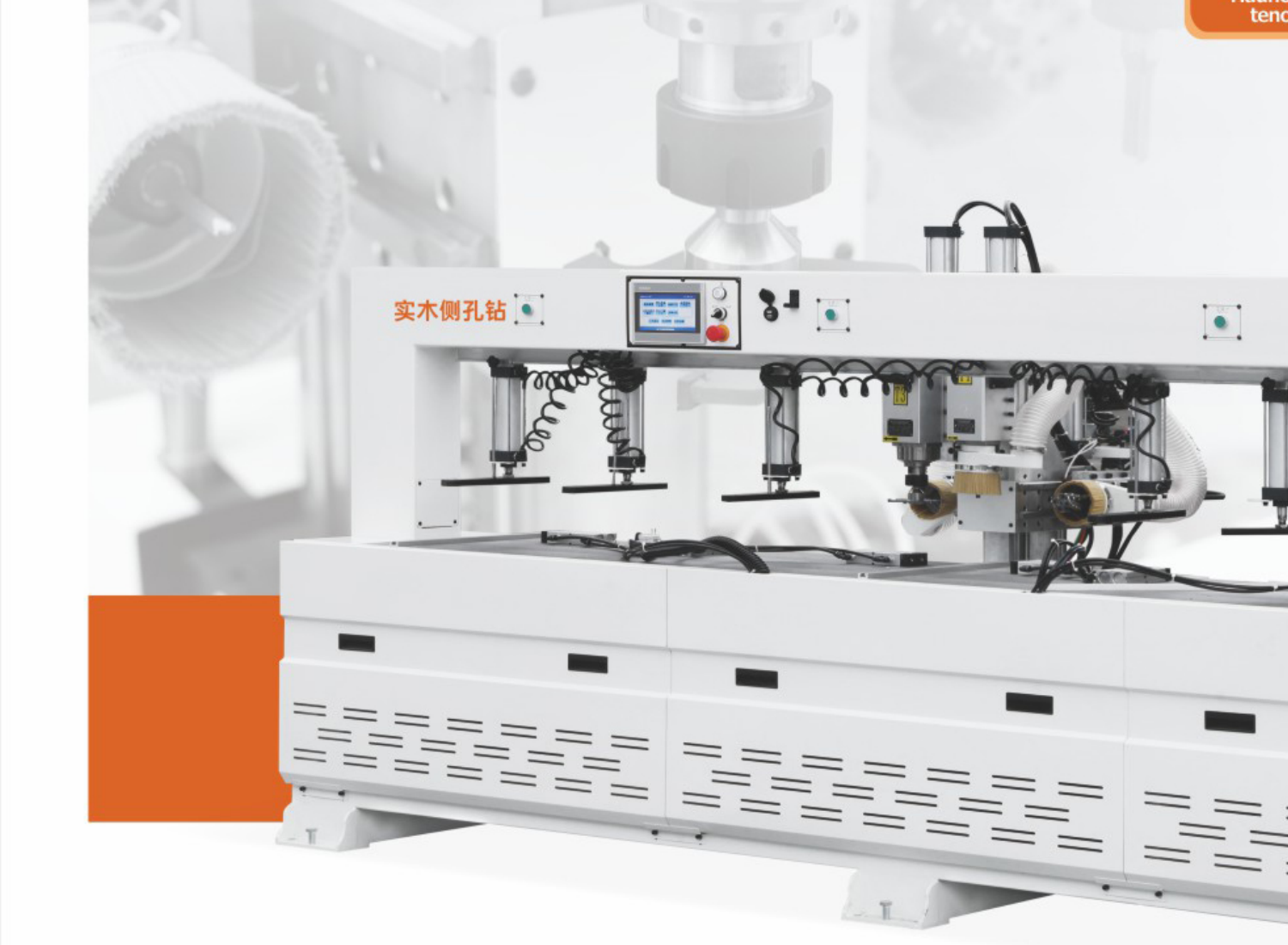
For the currently available configuration page, see the CNC Side Hole Drills category and the SM3100 product page.
1. Define the actual component before discussing the machine
Provide a drawing or representative sample. Confirm the wood species or other material, the component length, width and height, the visible surfaces, the joint or slot geometry, and whether left/right or angled processing is required. These inputs decide what travel, tooling access and support arrangement should be reviewed.
2. Identify every joint, mortise and slot in the required sequence
List the operations in the order they need to occur. Typical examples may include elongated tenons, slots, mitered joints, round tenons, mortises, grooves, V-notches and drilling. Do not assume that a single example shown on a machine page proves suitability for a different workpiece; confirm the actual geometry and sequence.
3. Check movement, clamping and tooling together
Travel dimensions alone do not define suitability. Review the component orientation, the spindle approach, the fixture and clamping arrangement, any angle support, and tool-change or tool-setting needs as one system. This reduces the risk of choosing a nominally similar configuration that cannot support the real workflow.
Buyer checklist
- Workpiece drawing or representative sample
- Material and finished dimensions
- Every joint, mortise, slot and drilled feature
- Required machining order and visible surfaces
- Tooling requirement and acceptable fixture/clamping method
- Expected output, voltage, workshop space and adjacent process
4. Use the configuration page as a starting point, not a shortcut
The SM3100 page presents a four-spindle configuration with listed 2800 mm X-axis travel, 150 mm Y-axis travel, 100 mm Z-axis travel and a 100 mm processing height. These values are useful discussion inputs. They are not a substitute for checking the complete workpiece, joint and tooling requirement before quotation.
Review the SM3100 configuration
Use the product page for the machine overview, component details, processing examples, one operating video and the technical table. Then send the actual part information for configuration confirmation.
5. Request a proposal that explains the process fit
A useful proposal should map each required operation to the proposed configuration. Ask which workpiece condition is assumed, how the part is positioned and clamped, what tooling is needed, and which items still require confirmation. This makes the decision auditable before an order is placed.
Buyer questions before quotation
What should a buyer prepare before evaluating a four-spindle mortising machine?
Prepare a workpiece drawing or sample, material, dimensions, joint or slot geometry, required processing sequence, tooling requirements, expected output, voltage and available workshop space.
Why is the joint geometry important?
The joint geometry determines the required movement, spindle arrangement, tooling and workpiece support. A meaningful configuration discussion should start from the actual part rather than a machine model name.
Are displayed machine specifications the final quotation configuration?
No. Listed specifications provide a discussion starting point. Confirm the final configuration against the actual workpiece and process requirement before quotation.